Showing posts with label fiction. Show all posts

Wednesday, September 28, 2016

Children Are Jailed For Their Parents' Crimes in Blame (Book Review)

Blame is a near-future dystopian novel set in the UK. Following a global economic depression, public anger focuses on those who benefited financially from embezzlement, fraud or other crimes. The people want revenge, but in many cases the perpetrators are dead or can't be found. So attention turns to their descendants, and the concept of "heritage crime" is born.

As Abie (a.k.a. Ant) explains it: "People don't like us, Mattie, you know that. Outside it's because we 'got away' with it for so long, because we had this great life we weren't supposed to have…. It makes them feel better if they can blame us for everything. They used to blame black people, refugees, Jews, immigrants, whatever. Then they ran out of people to point fingers at. So now it's us."

Ant, her brother Mattie, and their foster parents Gina and Dan, are all found guilty of having criminal parents, and are put in one of the new "family prisons" in the UK. Their chief tormentor is Assessor Grey, the man who spearheaded the family-jailing movement. He also dreamed up the cruel strap that bolts onto the backs of these "heritage criminals" and prevents them from walking normally. The resultant gait gives them the nickname "strutters."

Ant is a rebel and unwilling to keep her head down until her "debt to society" is paid. She's looking for a way to escape, and not a moment too soon, as conditions are deteriorating, not only in their own prison but in the prison full of actual violent criminals, which, awkwardly enough, connects to their prison via a corridor.

Bizarre circumstances ensue, leading to Ant and her brother finding themselves on the lam with a gang of other strutters. In order to survive, they must commit some minor crimes—a reminder that when we label people as bad, fairly or not, and repeat it over and over again, they tend to oblige us by becoming so.

Other improbable things happen, and it all culminates in a bonanza of triumphant improbability. People who demand realism in their fiction may not be happy with this book. On the other hand, readers who can suspend their disbelief will find it a breathless ride. It is, in fact, much like a Hollywood thriller.

It's also thought-provoking. One is tempted to dismiss the novel's central conceit as something that could never happen in our allegedly enlightened society. But look at what's happening in the world today. Even well-off people are ready to see themselves as the victims of Syrians, Mexicans, etc., who come from other countries in search of a better life. A Trump presidency seemed a laughable impossibility to many just one year ago. Blame is popular right now. The Bible itself gives us a precedent for heritage crime, saying "The Lord is slow to anger and abounding in steadfast love, forgiving iniquity and transgression, but he will by no means clear the guilty, visiting the iniquity of the fathers on the children, to the third and the fourth generation" (Numbers 14:18).

One of my favorite things about Blame is its sprinkling of foreign languages. Ant and Mattie are half Haitian and sometimes speak Creole to each other. A Creole nursery rhyme that serves as a metaphor for their condition comes up in a couple of places. Creole is a fascinating mix of French and something altogether different.

Another language that comes up in the book is German. Germany is the only country in Europe without heritage crime laws. They have learned from their history and no longer give in to the temptation to blame a group of others for their problems. Thus German is seen by the strutters as the language of freedom. Strutters dream of immigrating to Germany.

Finally, the strutters have their own slang, a glossary to which is provided at the beginning of the book. The author appears to take a special interest in languages. I'm curious to see if he plays with languages in his other novels.

Wednesday, April 22, 2015

Book Review: The Sharing Knife Part 4: Horizon

Horizon (The Sharing Knife, #4)Horizon by Lois McMaster Bujold
My rating: 3 of 5 stars

Book 3: Passage, dealt with Dag and Fawn's journey down the rivers Grace and Grey and the experiences, good, bad, and ugly, that they have along the way. When Horizon opens, they have come to the end of their river journey, in the seaside town of Greymouth. Here Dag meets Lakewalkers of a nearby camp who are able to direct him to a medicine maker of great repute, and he is at last able to begin an apprenticeship. But the usual problem, Lakewalker non-acceptance of his farmer wife Fawn, asserts itself, and it's not long before Fawn and Dag are on the road again.

I found this to be the weakest of all the Sharing Knife books. The problem of too many characters, some of whom never get developed, cropped up to some extent in the previous book, but here it's a good deal worse. By mid-book, there are so many people tagging along with the party that it's hard for the reader to remember many of them, especially since a good five or six are little more than names, and four or so others get such short shrift that their motivations are unclear, their behaviour inconsistent, their characters murky—Calla especially. I think the book would have been better if she had been edited out altogether. I also would have edited out that poor family in the wagon; I don't think they added anything of value. Granted that there have to be some farmers around for the climactic malice encounter, they don't need to be that darned numerous. The excess of characters also bogs down the story, especially around three-quarters through, and the proceedings get downright dull for a while.

Which is a shame, because pulled down by all that bloat is a fine story, with many dramatic and even horrific elements, and once again, Fawn's talent for thinking outside the box proves essential. I mentioned Fawn's increasing domestic yearnings in my review of book 3. That does not change in book 4. Fawn still wants to settle down and have an iron cook-stove and babies. Yet she can still come through in the crunch, and so really, though fans of kick-ass women in fantasy fiction are unlikely to be pleased, I think it's for the best that she is presented this way; she makes for an unusual, and even unusually well-rounded, female heroine. And though Dag and Fawn may seem to have somewhat disparate needs, they manage to get them all met in the end while remaining together.

Speaking of Fawn having babies, there is a consistent theme of birth and pregnancy throughout the series, which culminates in an unexpected and bizarre fashion in Horizon. I haven't yet managed to work up a good analysis of this theme, but I feel it could and should be done, and that Freudian psychologists could very well have a field day with some of the imagery. Perhaps later I'll manage to come up with something.

I wonder if the book's problems may be due in part to its being fourth in a quadrilogy. It is an unusual form, and there may be a good reason for that; perhaps it is an unwieldy one as well. And of course, the longer and more complex a story is, the harder it is to wrap up. But wrapped up it is, neatly enough at the last. Whatever flaws Horizon has, it is still worth reading to see how well everything is resolved at the end.

View all my Goodreads reviews

Buy this book at Book Depository and get free shipping.

Wednesday, October 1, 2014

Book Review: The Sharing Knife Part 3: Passage

Passage (The Sharing Knife, #3)Passage by Lois McMaster Bujold
My rating: 4 of 5 stars

At the end of Book 2: Legacy, Dag decides to leave his Lakewalker camp and travel among farmers so that he can find a better way for Lakewalkers and farmers to live together, neither apart nor as lords and serfs. (Somewhat to my annoyance, he does not discuss this ahead of time with Fawn; he just makes the announcement. This marks Fawn's transformation into traditional tag-along wife and helpmeet.) Fawn arranges them passage on a riverboat in exchange for work, and they float down the Grace and Grey. Joined at the start of their voyage by Fawn's brother, Whit, and an injured boy, Hod, they soon pick up a couple of young Lakewalker patrollers, and a sort of unofficial river patrol begins to form, with Dag as leader. The boat Boss, Berry, is on a mission to find out what happened to her father, brother and fiance, missing since the previous season. They find out the ugly truth, not a Malice, but malice in human form, and the unofficial patrol camp joins up with several boaters to deal with the matter.

While Book 1: Beguilement is devoted to Fawn and Dag's blossoming romance, and Book 2 shows us how Lakewalkers live and fills us in on their history, Book 3 is very much Dag's book. Dag is struggling to develop his new-found medicine maker powers with no mentor to help him. He performs odd experiments, sometimes putting himself in danger, but overall he has more success than failure, and his powers grow. Fawn falls into the background, making dinner, offering support, going shopping and coveting wood stoves, dreaming of settling down and making babies. As Dag discovers power, she nurses domesticity. Some readers may find this unsatisfactory. For myself, I'm not sure. Certainly the traditional depiction of women in SF and F as either sexpots for men to rescue or career women embittered due to lack of a man, was inadequate. But the common modern-day solution of demanding that all women in fantasy be "kick-ass" and apparently infertile and without menstrual cycles is also inadequate. Bujold's depiction of this particular 19-year-old woman in this particular universe may be the compromise most appropriate to the story.

An aspect of this book that I appreciated is Bujold's handling of trauma. This too stands in sharp contrast to most SF and F fiction, in which the hero goes through all sorts of horrible experiences and emerges totally unaffected and free of PTSD. Bujold's handling of Fawn's flashback and emotional reaction as she revisits the malice cave (from Book 1) is sensitive and true.

View all my Goodreads reviews

Buy this book at BookDepository.com and get free shipping

Saturday, May 24, 2014

Book Review: The Sharing Knife, Part 2: Legacy

Legacy (The Sharing Knife, #2)Legacy by Lois McMaster Bujold

My rating: 5 of 5 stars

In Beguilement, Book 1 of The Sharing Knife, Fawn and Dag successfully overcame farmer opposition and Fawn's lack of groundsense to become both married (in the farmer tradition) and string-bound (in the Lakewalker tradition). But more than simple newlywed bliss awaits them, as Dag takes his new bride to his Lakewalker home and has to deal with opposition to his union. It turns out to be much more intense than what he faced from Fawn's family. His family, arguably the more dysfunctional of the two, decides to challenge the validity of the string-binding in counsel. To complicate matters further, another malice has appeared, this one much larger and more powerful. Dag and Fawn must separate for a time, so that he can go fight the malice. But Fawn is no passive female, and in this book, as in the previous one, her unasked-for, unrespected farmer interference in Lakewalker business turns out to be essential. Not that anyone other than Dag appreciates it, and their marriage is none the less challenged in counsel.

While Book 1 was devoted largely to Dag and Fawn's relationship, this book fills in more of the backstory of this world. We are given at least a sketchy idea of how malices came to be in the first place, and we learn that Lakewalker/farmer relations used to be very different—which is not to say better.

While I thoroughly enjoyed Book 1, I loved Book 2. I am eagerly anticipating my dive into Book 3: Passage.

View all my Goodreads reviews

Buy this book at BookDepository.com and get free shipping

Book Review: The Sharing Knife, Part 1: Beguilement

Beguilement (The Sharing Knife, #1)Beguilement by Lois McMaster Bujold
My rating: 5 of 5 stars

When farmer girl Fawn gets herself in trouble (in the old-fashioned way), she runs away from home, but ends up finding even greater trouble, in the form of a malice. Fortunately, she also finds Dag, the alluring though much older Lakewalker.

Lakewalkers roam the land seeking out and destroying malices, creatures that suck the life out of everything around them. Despite performing this important service, they are not well-liked by farmers, who fear them as necromancers. Lakewalkers, in their turn, hold the farmers in contempt and see them as something like ungrateful children. So you can imagine that when Dag and Fawn fall in love and want to get married, the reaction on either side is less than positive.

This first book is mostly about the romance blossoming between Dag and Fawn, but it also begins to fill in the background of a complex and fascinating world, where everyone has a life force, known as a "ground," that can be detected and manipulated by those with a "groundsense"—mostly Lakewalkers, but also the rare gifted farmer. Where immaterial, immortal beings called "malices" clothe themselves in flesh and gain strength by consuming the ground of all living things around them, resulting in dead areas called "blights." Where said malices can be "taught mortality" through the sharing knives, which are made through the deaths of two people, and are so called because they share their deaths with the malices they pierce.

Featuring likeable characters, tense adventures, and even a believable and sensitive sex scene (yes! who would have thought it possible?), this is a compelling and promising start to the quadrilogy.

View all my Goodreads reviews

Buy this book at BookDepository.com and get free shipping

Saturday, October 5, 2013

Review: One Night @ the Call Center by Chetan Bhagat

One Night at the Call CenterOne Night at the Call Center by Chetan Bhagat

My rating: 2 of 5 stars

For its first three-quarters, this is a perfectly decent novel about a group of people working at a call centre. Shyam, the team leader and the main character, struggles to get over his old girlfriend, Priyanka, who works in his team. To add to his unhappiness, his boss Bakshi is an unprincipled moron who routinely takes credit for Shyam's ideas and work. Priyanka still has feelings for Shyam, but wants to make her mother happy, and her mother wants a "better match" for her. The other agents have their problems as well. Esha wants to be a model, but keeps getting told that she's too short. Radhika's mother-in-law is making her life miserable. The man known as Military Uncle says little, and suffers in silence with his secret pain. And finally, Vroom... well, Vroom is screwed up six ways from Sunday.

Their problems and interactions are told believably and engagingly through dialogue and flashbacks to dates between Priyanka and Shyam, which illustrate the deterioration of their relationship. Then comes the moment that they receive, on Shyam's cell phone, a call from God. Ironically enough, this is the moment when the story goes straight to Hell. Each thing they do to "fix" their situation is more inappropriate and implausible than the thing before it. There were scenes that I read while squinting and scanning because that was the only way I could stand them. After all, I didn't want to abandon a book 18 pages from the ending, even if it deserved that.

How did things go so badly wrong? I wonder. It's tempting to blame the phone call from God. After all, this was a completely realistic novel up to that point. One might argue that the author had no business turning it into a fantasy three-quarters of the way through. However, I was willing to accept the God call. After all, the author prepares us for it in the prologue.

In my view, the failing is a moral one. What kind of person thinks it's appropriate to meekly tolerate a boss's betrayals without a word, then all of a sudden blackmail him with a made-up email and physically abuse him? There are abundant options between these two extremes, and a moral adult would try one or two of them before resorting to violence. A moral adult would find a better way to save a call centre than by terrorizing Americans with lies. (By the way, Americans are abundantly and enthusiastically insulted in this book, so think twice before buying it if you are American. I'm actually amazed it got picked up by an American publisher.) Perhaps an author who has not managed to become a moral adult is the one most likely to resort to a literal Deus ex machina to fix his novel. There is a species of laziness here, which itself is a type of moral failing. Furthermore, if the thoroughly unbelievable turnaround of Priyanka followed by the thoroughly unbelievable rejection by Shyam followed by the thoroughly absurd and painful-to-read romantic car chase and reconciliation (thank you, squinting and scanning!) is any indication, the author has watched far too many Bollywood movies.

Yes, the previous paragraph has a lot of spoilers in it, but that's OK, because you don't want to read this book. Trust me. That would be several hours of your life you'd never get back.

View all my reviews on Goodreads

Sunday, August 18, 2013

Review of Rule Zero by Laurence Timms

Rule ZeroRule Zero by Laurence Timms
My rating: 4 of 5 stars

If you love non-stop action, mayhem, explosions, wanton destruction and high body counts, with maybe a zombie thrown in for good measure, this is the book for you. Laurence Timms is a screenwriter, and it shows. If Rule Zero were made into a movie, it would be very much at home with the other Hollywood thrillers of the day, only perhaps even more so. Timms is what the genetically engineered offspring of Iain R. Banks and Douglas Adams would be like if he were also high on amphetamines.*

Towards the start of the story, when things are calmer, there are some humorous and even insightful moments, especially pertaining to Helen, the luckless fluff-piece-writing journalist who gets caught up in the dangerous game going on between the Ministry of Defense and its enemies. For example, "She was the kind of person who packed four kinds of nightwear for a weekend away on the basis that you just never knew. What it was you never knew she wasn’t sure, but in Helen’s book equipping oneself with a choice of nightwear went some way to mitigating the horror of the unknown." These felicitous observations last until the action gets underway in earnest (up until that point, several people have tried to kill Helen, but it turns out that's nothing compared to what's coming), and then things are rather grim for quite some time.

To my mind, the novel's biggest flaw is its length. There is so much of it, so many different characters and different things going on, that the problem is twofold; a great deal to remember, and plenty of time in which to forget it. So I often found myself thinking things like, "Who's that guy again?" "What is this SMILE company trying to achieve, anyway?" and finally, "Was that explained earlier? Because I didn't get that at all. Did I miss something?" I expect that won't be an uncommon experience for readers. It might be a good idea to keep notes. Failing that, you might have to read the book twice to fully understand it.

View all my reviews on Goodreads


* And yes, he is British. Why do Brits write so much better than North Americans, by and large? Is it the educational system? The canings? Tea with milk? Frequent rain? I don't know, but I must find out. Back

Friday, May 27, 2011

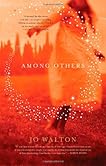
Review of Among Others by Jo Walton

Among OthersAmong Others by Jo Walton
My rating: 2 of 5 stars

There's such a lot wrong with this novel it's hard to know where to start. On the one hand, it's easy to read, even though I got to a point where I was thinking, enough with the shopping excursions and book purchases, have something happen already! Morwenna's sad situation, her out-of-place feeling at school and her struggles with her handicap (something the author herself obviously has an intimate knowledge of) are all movingly detailed. And I like the idea of a daughter having to face an evil magical mother. Usually in fantasy fiction, it's a son contending with an evil father. As well, there is an attempt to imagine how magic might work in the real world that we're all familiar with, through coincidence and such, and that gives the story a verisimilitude that's appealing.

Now that I've got the positive aspects out of the way, let's look at the shortcomings. There is so much talk of science fiction in this novel, including specific authors and books, that it can feel at times more like a recommended reading list than a novel. I found myself thinking of a statement in Brenda Ueland's book, If You Want to Write: "You cannot move people by a second-hand infection" (p. 119, Graywolf Press paperback edition). In other words, when Heinlein, Zelazny, Le Guin et al wrote the books that Jo Walton loved so, that was art, but when she wrote a book that was eighty percent, "Squee! SF is so great! I love Heinlein and Zelazny and Le Guin! Squee!" that was not art.

Another problem is that the most climatic event in the heroine's life happened before the novel begins. That put me off balance. I kept wondering, are we ever going to get a detailed description of what happened? (The answer is no.) I also wondered, why didn't she just write a novel about that event? Maybe it would have been more interesting.

Since novels need climaxes, another climax has to happen, and compared to what has gone before, it feels anticlimactic. The worst part of this anticlimactic climax, maybe the worst part of the book, is that it violates the laws of magic that Walton took such pains to establish beforehand! All through the novel she's telling us, "Magic is always deniable," and then at the very apex of the plot, gives us a thoroughly undeniable piece of magic, with no explanation. What happened there? Was the ending rushed? I don't know, but it's a boner of major proportions. (Hey, Morwenna's a horny teenage girl. Why not throw in a double entendre?)

In summary, it's another one of the most wildly overrated books around. There appear to be a lot of those. Why is that?

View all my Goodreads reviews

Tuesday, May 10, 2011

Review of Rut by Scott Phillips

RutRut by Scott Phillips
My rating: 3 of 5 stars

This story is set in a near-future dystopian United States. Climate change, pollution and peak oil have all taken their toll on a small town in Colorado. Once a popular tourist destination but now dying, its only visitor is a young biologist, come to study the local frogs. Although frog populations are declining worldwide, frogs are flourishing near this town. However, effluent from a mining operation is having an odd effect on some frogs, leaving them stuck in the tadpole stage; they'll grow up to a foot long, but remain legless, a fate that parallels that of many of the town men, who are missing legs from all the wars they've served in, and a boy named Cole, who's seventeen years old but looks eleven. Like the frogs, his development has been stunted by his environment.

Although this is definitely science fiction, it's not a fast-paced novel with emphasis on action and thrills. Rather, it focuses on the everyday lives of the townspeople and how they react to the arrival of the newcomer. One might classify this as literary fiction, but that doesn't mean it doesn't go anywhere; this ain't The Shipping News. To the contrary, the ending is explosive... and I don't just mean that figuratively. While it's not a page-turner, if you stick with it until the end, it will stick with you.

In fact, I was a little sad to have to give away my copy. This is a Concord Free Press book, which means you get a copy for free but you have to give a donation to a charity of your choice, then pass the book on so that someone else can do the same. So if you want to read it, you can either ask Concord for a free copy (they have a form for that purpose on their web site), wait until somebody gives you their copy, or wait until the novel becomes available from a traditional publisher and buy it. Take your pick.

View all my Goodreads reviews

Thursday, March 3, 2011

The Hobbit by Théâtre Sans Fil: Not That Great, Really

Sometimes, when you take in something that's famous or has been heavily praised, and it doesn't live up to your expectations, it's hard to admit that to yourself. You want to like it, because you think you should. After all, everybody else seems to. I experienced this recently in the context of the puppet show The Hobbit by Montreal-based troupe Théâtre Sans Fil. (I daresay that if you're going to be mediocre, it's a good idea to aim your work at children, who tend to accept things the way they are and don't have extensive critical faculties.)

It was therefore lucky for me that I happened to sit down next to a certain acquaintance. Fredericton is like that. You can decide on the spur of the moment to go to the theatre by yourself, find your way to your reserved seat, and discover that you're right next to someone you know. The city is just that small.

This particular someone is the most upbeat, positive, easily-delighted human being on the planet. She loves everything. For example, I saw she had a Kobo ereader with her in the theatrre. "Oh, I have one too!" I exclaimed. "Do you love it?" was her response. And I felt duty-bound to say, "Uh, yeah," even though, really, I just like it.

But when the show was over, she said, "Well, that was fun." Ouch! Coming from her, that's some pretty damning criticism. So I feel justified in my conclusion that despite its having toured all over Europe, Asia, etc., Théâtre Sans Fil's puppet show is not that great. My friend didn't love it.

The strong point of the production has got to be the puppets, some of which are spectacular. Gandalf and the elves flounce and glitter in their flowing finery. Bilbo, on the other hand, is kind of unattractive. I wondered if his face had been copied from that ugly animated version of The Hobbit. I also wondered why he had green hair.

Another aspect of the Bilbo puppet that I found somewhat distressing is that he never got to use his legs. They just dangled. Is that world-class puppetry? Honestly. With most of the characters, this wasn't a concern because they didn't have legs. Gandalf, the elves and the dwarves were all robe people. But there's Bilbo with an obvious pair of legs and he's swishing around like a seahorse.

I should probably mention here that Théâtre Sans Fil, which means Theatre Without a String, lives up to its name: the puppets are not manipulated from above with string; instead, the puppeteers stand behind the puppets, shrouded in black, and manipulate them directly. It's the same principle that works so well in the Famous People Players shows. Indeed, Théâtre Sans Fil also makes use of ultra-violet light, and the puppets can be seen to glow in moments of low light. It all works to great effect in dark scenes, such as the one in Mirkwood Forest. Indeed, that scene is the highlight of the show. When Bilbo loses contact with the dwarves, glowing filaments appear and spin themselves into spider webs as we watch. Glowing spiders make an appearance soon afterwards, and they're pretty neat too, although they tend to cluster together in suspiciously human shapes.

In well-lit scenes, which, bizarrely, constitute most of the show, the illusion is ruined by the clear sight of people in hoods behind the puppets. One is at a loss to explain such unprofessionalism. Why did they choose to beam lights all over the puppeteers during most of the scenes? Didn't they check how it would look beforehand?

Mind you, this gaffe did add an interesting element to the dwarf puppetry. Most of the dwarves in The Hobbit are fairly anonymous and interchangeable, as suggested by their rhyming names: Fili and Kili, Bifur, Bofur and Bombur,and so forth. In tacit acknowledgement of this fact, the puppeteers often lined up a row of dwarf puppets on a pole or rod of some kind and waved it back and forth, making it look as if the dwarves were playing see-saw in the park. Well, when you could see the puppeteer's heads sticking out from behind the waving dwarf-row, which was most of the time, it looked as if there were extra, black-hooded dwarves behind the first row. Like mirrors in a dining hall, it made the dwarf entourage appear bigger than it was. Definitely what you want when you're going up against a fire-breathing dragon.

But back to Bilbo's limp legs. When doing this kind of puppeteering, it is a simple matter to control the legs, more so than with marionette puppeteering I should think. All one needs are sticks connecting each leg of the puppeteer to the corresponding leg of the puppet. Indeed, this was done with the trolls, who had legs, and Gollum, who also had huge feet and was one of the most appealing personages in the show. Yet Bilbo, the main character over whom one would expect more care to be taken, was left dangling, literally.

With the exception of Bilbo and his legs, most of the production design effort went into the puppets. The set was exceedingly sparse, consisting mostly of Bilbo's front door and a couple of big wooden things that looked like boxes with jointed lids. These two boxes were moved around to be made into everything: Bilbo's table, hills, cave openings and so on. Sometimes this worked out better than at other times. In particular, things became odd and confusing as Bilbo wandered around looking for food before running into the trolls. He approached a box, hovered over its open lid, ineffectual legs flapping, and when he got to the other side, the lid apparently tried to close on him, but he managed to wiggle out of the way. I wracked my brain trying to figure out what this alien landscape was supposed to represent. I don't recall troll country being described that way in the book.

In addition to Bilbo's leg handicap, fortunately compensated for by his hovering abilities, Bilbo is haunted by two oppressive forces that follow him around: irritating music and excessive narration. The music is the sort of relentlessly peppy stuff that gets foisted on kids. Maybe they like it; I don't know, but like it or hate it, it sometimes makes the narration difficult to hear.

As for the narration, I realize that if you want to condense a novel with a complex plot into a puppet show that lasts an hour and a half, you're probably going to have to narrate something. But you ought to refrain from narrating things that could be better expressed in dialogue. The tendency to overnarrate got underway fairly early on and worsened as the show continued. Near the end, practically everything was narrated. Thorin Oakenshield's rage at having the Arkenstone withheld from him as well as his eventual conciliation is all dispatched in one sentence. They seemed in a raging hurry to get the play over with so that everybody could go home.

Earlier I mentioned the dragon, Smaug. The Smaug puppet is a fine one, decked out in glowing ultraviolet reds and greens. Ironically, its failing is its lack of flaw. Smaug is supposed to have a vulnerable, bare spot on his left breast. This is mentioned no less than three times in the play, once by the narrator, once by Bilbo, and once by a helpful bird. Furthermore, Bard of Laketown stabs at it with a sword. (In the book, he uses an arrow, but I suppose that's difficult to pull off with puppets.)

But where is this bare spot? Nowhere to be seen, and I think this may be the stupidest oversight of the whole sadly mediocre puppet show. It would have been so simple a matter to, say, glue or sew a piece of black felt onto the left underside of the puppet. It would have shown up so well against the ultraviolet colours. But they didn't. Why didn't they? Why did they allow this confusing inconsistency to stand? My guess is that they didn't give a crap. After all, if they were interested in or capable of attention to detail, I wouldn't have found so many details to pick on and the whole production would have been much more enjoyable.

In conclusion, while some spectacular performers and troupes have emerged from Montreal, Théâtre Sans Fil is not one of them. At the end of the play, the senior member of the troupe announced that they are working on a puppet version of Weaveworld by Clive Barker. I expect it will be similarly mediocre. But the puppets will look great.

Monday, October 11, 2010

Mildly Amusing Writing Exercises: Nursery Rhyme + Genre

In writer's groups I belong to, or have belonged to, we sometimes do writing exercises. Most of them have been focused not so much on honing specific stylistic skills as on getting the creative juices flowing while having fun at the same time. As a result, we tend to lean toward the funny and silly exercises. After which, one is left with a piece of writing that one doesn't know what to do with. (Look, I just ended a sentence with a preposition. If only my writing exercises were more highbrow, I might have known better.)

I have old writing exercise results lying around that I am fond of, even perversely proud of. It seems a shame that they are only seeing the inside of my underwear drawer. Still, it's not as if I can submit them for publication. But here's a thought: I could post them on my blog.

One of my writing friends is fond of nursery rhymes, and she came up with the following writing exercise. Write several nursery rhymes down on little scraps of paper and put them in a hat. Then write down several genre names and put them in a separate hat. Each participating writer draws one piece of paper from each hat, that is, one nursery rhyme and one genre. The challenge is then to write a short story in the given genre, that somehow references the nursery rhyme.

I did two of these. See if you can guess both nursery rhyme and genre.


"Captain Wutax!" A note of alarm crept into the ensign's voice. "A Knitter's Guild vessel just decloaked off our starboard bow."

Before Captain Wutax could respond, the ensign cried, "They're powering weapons, Sir!"

"Raise shields," barked Captain Wutax, his jaw jutting out manfully.

"Shields at maximum. They're hailing us, Sir."

"Open a communication link. Onscreen."

With an electronic chirp, the hated face of Mrs. Connor, compulsive knitter, appeared onscreen. Fear and loathing twisted in Captain Wutax's guts as he saw she was swathed in a hand-knitted Victorian lace shawl over her hand-knitted cable sweater. The woman had no notion of when to stop. It was said that the Guild kept its ship ice-cold. Otherwise they'd swelter under all that knitted stuff.

"This is Captain Wutax of the Black Sheep. What do you want?"

"I think you know exactly what I want," drawled Mrs. Connor. "We know you've got wool. Hand it over."

"The Black Sheep has no wool for you!" thundered Captain Wutax.

"Don't hand me that. I know you have three bays full."

"Yes, for Master Blaster and his wife. They're going to share it with little Kimmy. We have wool for honest, paying customers, not pirates like you."

Mrs. Connor's mouth twisted. "Fine. If that's the way it's going to go. Let's see if your shields can stand up to our Needle of Doom!" The screen went black.

"Evasive manoeuvres," barked Wutax. "And arm... the Crotchet Hook!"

* * *

Nursery rhyme and genre: Baa Baa Black Sheep/Space Opera. I know it sounds a lot like a Star Trek rip-off. That's because I haven't been exposed to much space opera, so Star Trek naturally came to mind. By the way, I was going for a cheesy, overwritten effect. That's why so many faces are twisting and jaws are jutting manfully. I don't normally write that way. Honest.


As the police officer outlined the body in chalk, Sherlock Columbo took in the sumptuous surroundings. "Lovely place you've got here," he remarked absently to the distraught young woman on the sofa. She'd stopped crying, but her eyes were red-rimmed and the tissue in her hands had disintegrated into moist little shreds. "That's a very nice sofa," Columbo continued. "I bet that's no later than 18th century." She gazed at him with bewilderment.

"That's a nice piece too." He nodded at the grandfather clock that rose above the corpse. "Excellent condition."

Watson, his assistant, leaned in close and said in a low voice, "Sherlock, the young lady is obviously upset. Do you think it's appropriate..."

"Oh! I'm sorry." Columbo smiled at the woman, who dissolved into fresh tears. "Oh now... here, take my handkerchief." He whipped the white cloth out of his breast pocket and handed it to her. She blew her nose with a loud honk.

"Keep it. I have plenty."

He turned to Watson. "One thing we know," he murmured, "is that the murder occurred between midnight and one in the morning."

"We do? How do we know that?"

"You'll notice the mouse." Columbo pointed, and Watson saw the tiny black eyes peeking out from behind the pendulum. "As we know from the scientific reports the deceased published in Nature Journal, this mouse was in the habit of running up the clock at midnight, and back down at one. It was like... well, clockwork." Columbo allowed himself a small chuckle. "And yet the mouse is still in the clock. Why?"

Watson looked at the body. "The mouse was afraid to come down because of the body at the base of the clock. Very clever, Sherlock!"

"Elementary, my dear Watson."

* * *

Nursery rhyme and genre: Hickory Dickory Dock, the mouse ran up the clock/Mystery.


Wasn't that fun? Maybe I'll post some more later.

Monday, August 16, 2010

Omigod What an Awful Sentence

It is said, "Those who can't do, teach." At times I think one could just as well replace the word "do" with "write" and the word "teach" with "edit." Which is fine. After all, we writers need editors so that we can get our work perfected and published. That's the theory, at least. The reality is more like, we writers need editors to send us rejections containing foolish remarks or cryptic "advice." I got a particularly disturbing rejection letter yesterday, which I may make fun of later. But not right now. Right now, I'm making fun of something else, because I need to find another place to send this rejected story, a need that sent me to the Internet, which in turn led me to an article entitled, "A Comprehensive and Totally Universal Listing of Every Problem a Story Has Ever Had."

Just the thing for a writer who's been rejected, right? Well, you would think. But there's the problem mentioned above: editors often can't write. This fellow admits as much, calling himself "a tolerably mediocre author who has seen more form-letter rejections than penis-enlargement spams." Having gotten just short of halfway through his article, I agree with all of that statement except the "tolerable" part. Now, it's great that he has found a way around his unfortunate handicap--by becoming an editor--and kind of him to share his hard-earned knowledge with us writers so we can improve ourselves... I guess. I confess, I'm always a little suspicious of constructive criticism, especially the unsolicited kind. What portion of the motive is sincere helpfulness, and what portion is smug superiority? Even putting that aside, good intentions and frank admission of shortcomings are nice but not enough in themselves. If you know you don't write very well and you still want to get your wisdom out to the world, you need to get yourself--now, this is ironic--an editor. Or perhaps a ghost writer. If you don't, you're liable to end up embarrassing yourself in front of the world with sentences like this:

Point of view failures are usually some kind of loss of containment, such as when the narrative voice is first person but the narrative perception starts slipping off to places where the narrative character could not carry the reader or a third person POV that usually stays outside on the shoulder of characters but sometimes jumps inside the head for a first-person peek.

No joke, I read this sentence five or six times and I'm still not sure what he's trying to say. The latter half of the sentence is particularly scary: a mess of interlocking, ambiguous subordinate clauses. Sentences like this happen when a "writer" gets more involved in showing how clever and imaginative he thinks he is than in conveying his meaning to the reader. That this particular "writer" was absorbed with his cleverness and imagination, or imagined cleverness, is shown earlier in the article. Unnecessary zombie and condom metaphors abounded, but the thing was still readable. It is this one sentence, the sentence from the eleventh layer of hell (also mentioned in the article) that stops a reader dead, like the sight of two shattered cars by the side of the road. And when said reader stops reading altogether in order to make fun of the sentence on her blog, then clearly the article has failed. Which is a shame, because the world can indeed use a comprehensive listing of things that can go wrong in a piece of writing. I can't help but notice, however, that this one isn't completely comprehensive. After all, it makes no mention of long, convoluted, horrible sentences. Hmm. Maybe that's a blind spot.

Mockery aside, the article does make some good points. Read it, if you can.

Saturday, October 3, 2009

Dr. Horrible Wins Hugo

Back in February, I complained that the brilliant short musical comedy Dr. Horrible's Sing-Along Blog was shut out of the Oscars. So I am very pleased to report that the film has at last gotten the recognition it deserved. It won a Hugo for Best Dramatic Presentation - Short Form.

The Hugos are presented yearly at Worldcom, an enormous SF convention that takes place at a different location each year. This year, it was in Montreal, Quebec. According to Locus Magazine, Colin Harris accepted the award on behalf of Joss Whedon and the other creators.

But who is Colin Harris? He does not appear to be any relation to Neil Patrick Harris, who played the title role. Airlock Alpha describes Colin Harris as a "prominent fan." On the other hand, a commenter to Whedonesque.com says he's a past WorldCon co-chair.

Hmm, I guess Joss Whedon and the gang were pretty convinced they wouldn't win. The only person they sent to pick up the award was someone who had nothing to do with the actual making of the film.

This unfortunate lack of self-confidence was also displayed in the acceptance speech that Harris read. "Hugo, you need to get your act together, man.... You must have too many categories if we win one of them" (Source: Locus, Sept. 2009).

Enough of this modesty, false or otherwise! At a time when most movies are soulless reworkings of last year's movie, Dr. Horrible's Sing-Along Blog was a lone gem shining out of a pile of Hollywood garbage. Yes, it deserved that award. It wouldn't have beaten out two Dr. Who episodes otherwise. (In case you're wondering, not only doctors were nominated, although they did top the heap. Other nominees were Battlestar Galactica and Lost episodes.)

Take heart, Dr. Horrible. At least Hugo respects you.

Thursday, September 3, 2009

A message from prot?

Here's a curious piece of synchronicity. While we were in Grand Manan, we paid a visit to the local library and James found a copy of K-PAX. Remember the K-PAX movie, about a guy in a mental hospital who calls himself "prot" and insists he's an alien from the planet K-PAX? Well, it was a novel first. In New Brunswick we have this nifty system where all the libraries are on one network, and we can use our cards anywhere in the province, so James checked the book out of the library.

In the movie, prot says he's returning to K-PAX on July 27. In the original book, the date is August 17. It's repeated several times: pyschiatrist Gene Brewer (who just happens to have the same name as the author) has very little time because of this cut-off date, August 17. Well, take a look at this slip, from the library book, and see what the return date was.

Coincidence? What are the odds? No my friends, this is a message. Prot lives! See you on K-PAX.

Monday, August 24, 2009

A Book Club Gone Bad

I have a bit of a dilemma. I'm sort of a member of a science fiction book club. It's a pitiful, limping creature and always has been. Only four or five people show up with any regularity, which would be fine if everyone read the books. They don't. I have gone to meetings where it was revealed that not a single person actually read the book. This is a common enough occurrence that our (for want of a better word) leader has taken to sending out mass emails saying, "The book we're pretending to read this month is ...."

Then too, there's the time that I showed up for a meeting and no one else did, as far as I could determine. I waited for half an hour and wandered throughout the place before giving up and leaving. It turned out later that there had in fact been a meeting, though I never worked out how the others managed to give me the slip. I found the experience disheartening, so much so that I haven't been to a meeting since, though I keep meaning to go. In fact, I have continued to think of myself as a member of the book club. I'm simply a member who hasn't shown up at a meeting in a while. I obtain the assigned books and don't read them, or I read a couple of chapters and lose interest. Because (and here's another problem I have with the book club) the books chosen represent a very particular taste, which I don't happen to share. The themes are either military, online gaming or space opera (a subcategory of military, come to think of it). The field of interest is so narrow that I think I can pinpoint exactly who is making the recommendations. This is not a good thing. A book club should represent as many literary tastes as there are people in the book club. That is, in fact, the advantage and perhaps even the whole point of a book club: the opportunity to experience a range of tastes, and read books you'd never pick up in the normal course of events.

Well, I'm certainly picking up books I'd never touch in the normal course of events, but they're all the same! And I don't like them. And the person who's making the choices is not experiencing anything new.

None of that is good. The lackadaisical nature of the club--not good. Book suggestions coming from only one, or at most two, of the members--not good. Said suggestions being consistently contrary to my personal taste--not good, at least for me. And yet none of those things is the reason why I am now saying to myself that it may be time to throw in the towel and drop out of the club for real. Because on top of all that, it seems that this one person (or at most two people) who is supplying us with all our reading material is not terribly discerning in terms of literary quality.

To put it another way, the latest book is pure cheese.

When I first held it in my hand and looked at its cover art, which consisted of space ships shooting at each other, I groaned and thought, "Not another bloody space opera!" Which was a bit unfair of me, since I hadn't bothered to read the previous one (New Space Opera, in case you're interested). That being the case, I decided to give it a chance. After all, I reminded myself, book clubs are all about being exposed to new reading material, and I am being so exposed, even if certain other people in the group are not. Let me then benefit. Let me open my mind.

So I began to read. The story is certainly action-packed, though convoluted as hell, what with all the faster-than-light travel through multiple dimensions. I read a lot of sentences twice, trying to figure out what was going on. Still, the captain of the ship is a woman, which is nice--it reminds me of Captain Janeway. The concepts are kind of interesting, and it certainly isn't boring. It begins with an enemy attack and hasn't slowed down for a moment. It is, in fact, paced like a short story, which is odd. But what really got my literary spidey-sense tingling was the second sentence of Chapter Three: "Fifty-three sleepless hours might explain her gaunt, hollowed cheeks, but not the ghosts behind her eyes."

Ghosts? Behind her eyes, of all places?

And things did not improve from there. Five pages later, I reached the paragraphs that stopped me in my tracks.

His face was blank for an instant, and then understanding flared.

"Of course." Life returned to his eyes--the blazing life of a man who has accepted the inevitability of something far worse than his own death and then been shown a possible way to avert it after all--and suppressed excitement lent his voice vibrancy as he nodded jerkily. "Of course!"

--from The Apocalypse Troll by David Weber

I shouldn't have to explain why this is terrible writing, but the sad fact is that this guy's a bestselling author, so I probably do. Note the melodrama, the pumping up of rhetoric in a flailing attempt to artificially excite the reader. Good writers know better. They know that if the story is exciting, they don't have to do anything extra to wring a response out of the reader. Not this writer. He follows up the flaring understanding with life--blazing life! Hallelujah! Also note that the character's voice is vibrating while he's nodding jerkily. This is quite amusing, as it was explained earlier in the book just how serious a problem conflicting harmonics can be when you're hopping dimensions in order to travel faster than light: "If a ship hit the wall just wrong or with the slightest harmonic in her translation field, she simply disappeared. She went acoherent, spread over a multitude of dimensions and forever unable to reconstitute herself..." I should think similar difficulties await the man who nods jerkily while his voice vibrates. Perhaps his head would explode.

Anyway, that's where I reached my limit. I'm sorry, but I'm not devoting hours of my life to swimming through such Cheez Whiz.

When did this happen? When did it become OK to publicly read and shamelessly tout crappy fiction, even to the point of suggesting it as a book club selection? Is this Stephanie Meyer's fault? Or did it begin earlier, without my noticing? Maybe Dan Brown is to blame? John Grisham? Danielle Steel? Sidney Sheldon? Should we have a line-up? Whodunit?

What ever happened to the good old days when reading crap was a private, guilty pleasure? Maybe they never existed and I only imagined them? Do book clubs read Harlequin Romances these days? Have I asked enough questions by now?

In any case, I realize that I'm beaten. I was going to show up at the next meeting and suggest Pandemonium by Daryl Gregory, which Locus selected as one of the best first novels of 2008. But it seems so hopeless. The book is not even a mass-market paperback. It's a trade paperback, and therefore more expensive. I've already been told that price is a concern. On top of that, it contains no gaming, space ships or bombs. Just noncorporeal demons and excellent writing. No one's going to be interested in that. Why bang my head against a wall? With or without harmonics in my translation field?

That's how I feel right now anyway. Perhaps later, as I consider the possibility that I could help these literary innocents discover good writing, my hope will revive, much as hope revived for the crew of the TNS Defender. And when that happens, life will reignite in my eyes--blazing life. My excitement, which I will be suppressing for some unexplained reason, will lend my voice vibrancy and I will nod jerkily. And then my head will explode.

Wednesday, April 8, 2009

My Unauthorized Guide to the Discworld Novels

This is the longest gap I've ever had between entries. Prior to this one, I did quite a long post, so that entitled me to take an equally long break. That's my story and I'm sticking to it. Still, eleven days is more than enough, so I've decided to finally get down to business and write this post I've had in mind for a few weeks now. I hope it proves more enjoyable than offensive.


Reading Discworld novels is a particularly poignant experience these days. Author Terry Pratchett has early-onset Alzheimer's disease. His fans are fond of saying that "he aten't dead yet," in reference to the sign that Granny Weatherwax wears around her neck while out of her body. I, like all his fans, hope he'll hang onto life and most of his faculties for a good long time.

Still, the experience has affected him and his writing. His latest novel, Nation--not a Discworld novel--is filled with more grief and anger than, to the best of my knowledge, anything else he has written. This is understandable. Pratchett has spoken with much honesty and humour about his anger over his condition and his treatment by the NHS (England's National Health Service), which considers him too young to have Alzheimer's and is therefore refusing him coverage. What he is going through is, in more ways than one, a life-changing experience, and even if he writes more Discworld novels, they will not be quite the same.

I suppose that's what made me take a nostalgic look back at the Discworld. I read one of the novels I hadn't gotten to before and took another look at some of the ones I had. Which has resulted in this, my Unauthorized Guide to the Discworld Novels.

What Is The Discworld?

The Discworld is a flat disc of a world that rests on the backs of four elephants, which in turn stand on the shell of a very large turtle. This world has different physical laws. Light moves slowly, flowing over the disc like syrup. Magic exists, and has its own colour: octarine. There are two types of magic practiced on Discworld: men's magic, the type practiced by wizards at the Unseen University in the city of Ankh-Morpork, and women's magic, practiced by witches in small villages.

That's a basic introduction. It's not my intention to reproduce The Discworld Companion. In fact, I don't mean to produce a guide to the Discworld itself, only to the novels.

Things You Should Know About The Discworld Novels

They contain footnotes

Novels don't usually contain footnotes. I've read a lot of novels and that's one of the major things I've noticed about them. The Discworld novels are different. Usually, the footnotes are used to insert jokes that entertain Pratchett, if nobody else, but aren't essential to the story. A startling exception can be found in the first Discworld novel, The Colour of Magic. The entire lower halves of pages 20 and 21 are taken up with one giant footnote explaining "the shape and cosmology of the disc system." One wonders why this information couldn't have been included in the prologue, which the book does have. Perhaps Pratchett was using this giant among footnotes to demonstrate to readers, right up front, just what they were getting into.

They contain puns

The Discworld novels are satirical and humorous. Some of that humour involves puns. For example, from the second Discworld novel, The Light Fantastic:

Tumbling past, totally out of control, is the bronze shell of the Potent Voyager, a sort of neolithic spaceship built and pushed over the edge by the astronomer-priests of Krull, which is conveniently situated on the very rim of the world and proves, whatever people say, that there is such a thing as a free launch.

Just so you'll know.

Now that you have been warned, I shall proceed to the heart of my unauthorized guide, the intention of which is to provide you with some handy rules of thumb to help you determine which Discworld novels you are most likely to enjoy. Note that they are based on my opinion, and are therefore not at all scientific--but then, neither is Discworld.

Vivian's Rules of Discworld Novels

Rule #1: Novels with Rincewind the Wizard in them are not as good as Rincewind-free novels

Rincewind is a sad-sack sort of character. I think I can best describe him as Wile E. Coyote without the malevolent intent. Aside from his fantastic trunk that follows him around on lots of little legs and gets him out of scrapes, He hasn't got much going for him. He's not a good wizard. He's not brave or morally upright. He can't even spell, as shown by his hat, which has "Wizzard" written on it. On top of all that, he appears to be cursed: everything bad happens to him, and everything that involves him goes wrong. So it shouldn't be surprising that he also has an unsalutary effect on the novels he inhabits. It's probably some sort of magical influence that has not been sufficiently studied. The wizards of Unseen University should look into it at their earliest convenience. It could be the subject of someone's dissertation.

This doesn't mean that the Rinceworld novels are not worth reading. All Discworld novels are worth reading. Even Rinceworld novels contain funny bits and brilliantly insane ideas such as watercrafts that are kept aloft by water-hating wizards called hydrophobes. But if you are new to Discworld, you may want to choose non-Rincewind novels first, and face the annoying "wizzard" only once you have become a diehard fan.

Discworld novels that include Rincewind are:

  • The Colour of Magic (#1 in the series)
  • The Light Fantastic (#2)
  • Sourcery (#5)
  • Eric (#9)
  • Interesting Times (#17)
  • The Last Continent (#22)
  • The Last Hero (#27)
Rule #2: Novels that contain wizards other than Rincewind are good

Wizards in Discworld generally reside at, or at least have dealings with, the Unseen University, and that's an interesting place. There's so much magic bouncing around in there that unexpected and often disastrous things keep happening. Which makes it very similar to male-dominated institutions in our own world, with the advantage that since it's happening in a humorous novel, everything works out all right in the end.

Unseen University is also graced by the Librarian, who was turned into an orangutan some time before the series started. (Correction: see below.) The wizards don't change him back, not because they can't, but because he's happier this way. I'm fond of the Librarian and wish we got more of him in the Discworld novels.

The University is located in Ankh-Morpork, a crowded, smelly, vice-riddled city--basically a magical, medievalish New York. If you prefer urban settings, stiff hierarchies and an absence of women, the novels involving wizards and Unseen University are right up your alley and you may want to disregard Rule #3.

Books that have wizards in them but do not have Rincewind include:

  • Equal Rites (#3 in the series)
  • Lords and Ladies (#14)
  • Reaper Man (#11)
  • Soul Music (#16)
  • Hogfather (#20)
  • The Unseen Academicals (#37)
Rule #3: Novels that contain witches are better

Witches on the Discworld stand in sharp contrast to wizards. Wizards are urban; witches are rural. Wizards love their rigid hierarchy; witches have no hierarchy but are communal. Wizards are celibate; witches are not, at least not always. It's unclear whether Granny Weatherwax ever got any action, but Nanny Ogg certainly did, and is not shy about letting people know how much she enjoyed it. Even Tiffany Aching is growing up and experiencing a little romance in Wintersmith (#35). Wizards practice dangerous, destructive magic, whereas witches use magic only when necessary, and then always in harmony with nature.

Pratchett's portrayal of women is interesting. They frequently come across as more multifaceted and human than the men, who are often simply figures of fun. Pratchett writes a lot of strong women. The formidable grandmother character crops up repeatedly, most commonly in the form of Granny Weatherwax, but there is also Tiffany Aching's grandmother, and in addition, the main character in The Dark Side of the Sun (not a Discworld novel) has an overbearing, interfering grandmother to contend with. (One wonders who may have been the inspiration for all these tough old ladies. Pratchett's grandmother, perhaps?) Pratchett's tendencies to write complex female characters while so often making the men play the fools explains the superior quality of the witch-themed novels. These include:

  • Equal Rites (#3)
  • Wyrd Sisters (#6)
  • Witches Abroad (#12)
  • Lords and Ladies (#14)
  • Maskerade (#18)
  • Carpe Jugulum (#23)
Rule #4: Novels that contain both witches and Nac Mac Feegles are the best

The Nac Mac Feegles, also known as the Wee Free Men, are a lot of fun. Like Picts, they are blue, and like Pixies, they are small. They speak in a sort of Scottish dialect, love fighting, and engage in strange antics. It's worth reading a Nac Mac Feegle book just for the dialogue.

As far as I know, books about the Nac Mac Feegle always have Tiffany Aching in them. She is a young witch-in-training that the Feegles are sworn to protect, and that's a good thing, because like any adolescent girl, she doesn't always do what she's told. And when you're a witch, that can have serious consequences.

The books that contain witches and Nac Mac Feegle are:

  • The Wee Free Men (#30)
  • A Hat Full of Sky (#32)
  • Wintersmith (#35)
Rule #4: Many novels contain other characters that are also worth reading about

Death, the personification with hood and sickle, stars in a number of worthy Discworld novels:

  • Mort (#4)
  • Reaper Man (#11)
  • Soul Music (#16)
  • Hogfather (#20)
  • Thief of Time (#26)

The Watch, who enforce the law in Ankh-Morpork, dominate several novels. One of the benefits of Watch Novels is the presence of The Patrician, Ankh-Morpork's lovable benign dictator.

  • Guards! Guards! (#8)
  • Men at Arms (#15)
  • Feet of Clay (#19)
  • Jingo (#21)
  • The Fifth Elephant (#24)
  • The Truth (#25)
  • Night Watch (#29)
  • Thud! (#34)

Resources


Erratum

I wrote above that the Librarian was turned into an orangutan before the series started. I've just discovered that in fact it happens at the beginning of The Light Fantastic. (It is the side effect of a spell cast by the grimoire Octavo to save Rincewind from falling over the edge of the world, if you wanted to know.) The first time we meet him, he's an orangutan, but technically he was a human until Book 2. My apologies for any inconvenience caused by this error. --April 15, '09 Back

Friday, March 27, 2009

Tumbarumba, the Random Story Dispenser

If you use Firefox, enjoy reading science fiction and fantasy stories (especially free ones!) and don't mind surprises while surfing the web, you should consider giving Tumbarumba a try.

Tumbarumba is an art project and Firefox add-on that comes with twelve stories. When it is first installed, the stories are inaccessible to you. You need to unlock them, one by one, which you do by doing what you usually do with your browser anyway: surfing the web.

Tumbarumba looks through the web pages you access for words that are also found in its twelve stories. When it finds a match, it splices the rest of the story's sentence to the beginning of the web page's sentence, producing a new sentence that is syntactically sound but doesn't make much sense.

To take an example from my own Tumbarumba-tinted surfing, the Tales of the Talisman's web site contains this sentence:

The hadrosaur talisman logo is inspired by a duckbilled dinosaur called a tsintaosaurus.

As well, the Tumbarumba story "The Little M@tch Girl" contains this sentence:

As Nera tossed him his fare, he called, 'Have fun, little sluts.'"

The word common to both these sentences is "called." So when I came across the Tales of the Talisman web page, I was faced with this puzzling declaration:

The hadrosaur talisman logo is inspired by a duckbilled dinosaur called "Have fun, little sluts. [sic]

When you come across one of these gibberish sentences, you can either conclude that the writer was smoking some bad weed when he wrote it, or that your Tumbarumba has kicked in. To find out which is the case, slide your mouse pointer over the anomalous sentence. If it changes to a link pointer , that's Tumbarumba. Click, and the add-on will insert another chunk of story text. If you keep clicking, eventually (in my experience, it varies from one to five clicks) the original web page text will fade out and the story will fade in.

Tumbarumba stories don't have their own web pages. The only way you can read the twelve stories is to allow them to hijack the web pages you are reading. The story text is forced into the format of the web page, sometimes with awkward results. I had one story that began in the thin left-hand column where the original web page had had its menu. Another story took over a form, which resulted in the story text being interrupted by fields. If you don't like the resulting format or find it unreadable, just wait, and eventually that same story will hijack a different web page.

To go back to reading the original web page, open the Tumbarumba pull-down menu in your Firefox browser, and select "Disable Tumbarumba on this page."

If you go to the Tumbarumba Table of Contents, also accessible from the pull-down menu, you should find that the story is now unlocked; that is, it is no longer plain text but is clickable. (Should: Tumbarumba does have bugs. See below.) One thing I haven't figured out yet is whether clicking just once on the gibberish sentence will unlock the story, or whether you have to keep clicking until the story hijacks the page. I suspect it's the latter but haven't experimented enough to be sure.

Obviously, this add-on is not for everyone. Some people would find it annoying. However, there's no risk involved in trying it, as you can always turn it off completely, again via the pull-down menu.

I have unlocked seven stories so far, and gotten around to reading three and a half. (The fourth was not to my taste.) Mostly, they're quite good. "Little M@tch Girl," a futuristic retelling of the Hans Christian Anderson classic, could haunt your dreams.

But the stories are not the only pleasure Tumbarumba has to offer. There's also the experience of coming across a sentence that produces a mental double-take. I've found it interesting to observe my brain's reaction to these sentences. First, it tries to go on reading, thanks to that built-in mechanism we all have in our brains that glides over anything that doesn't compute. This makes us more robust than those women robots encountered by the Starship Enterprise, that would break down when faced with paradoxical or nonsense statements.

So I tended to read on for a couple of sentences, then think, wait a minute, and rewind to the offending sentence. I'd reread it a few times and wonder what the author had been thinking. Only then would I remember: oh yeah, Tumbarumba. But this reaction varied if the sentence made sense in a whimsical sort of way. When I saw the dinosaur sentence mentioned above, my first thought was, "What a silly name for a dinosaur!"

I have since found that as I get more accustomed to the effect, I become quicker and quicker to recognize the gibberish as the result of Tumbarumba. Recently, I've even been able to skip the whole double-take routine. I kind of miss it. It's a reminder of what a small piece of reality we normally perceive. I also like feeling the shift in perception that comes at the moment of understanding. It feels like a bit of enlightenment.

Happily, I can still be tripped up in certain situations. Recently, I was searching the provincial government's web page for information on their latest budget, as research for my blog post on the subject. I read that the budget "provides Leadership for a Stronger horizontal," and laughed with glee at the lengths to which officials will go with their obfuscating jargonspeak. I had no idea what was meant by "a stronger horizontal," but I didn't doubt for a moment that it was something that would be put on a government web page. Like other inhabitants of modern society, I long ago abandoned the expectation that government officials would make sense, either linguistically or ethically. I decided to copy the sentence, because it was so funny, and it was only when the mouse pointer changed to a link pointer that I realized, at last, that I'd been Tumbarumba'ed.

The original phrase was actually "a budget that provides Leadership for a Stronger Economy." OK, that does make slightly more sense, even if it's hard to imagine how a budget can provide leadership.

To download Tumbarumba and try it yourself, go to the Tumbarumba home page and click on "Download." Note that you have to have Javascript enabled in your browser to navigate the home page.


Bug Notes: After I'd unlocked my first Tumbarumba story, I found that the hijacking mechanism kept failing. The original web page would fade out, but the story would not fade in, nor would it become clickable in the Table of Contents. I contacted support, and was told that there was probably something about the web pages that was interfering with Tumbarumba. I found this unlikely, since it had happened three times in a row. When I went back to the one story I'd unlocked, I found that I had disabled Tumbarumba on that page. I enabled it, and after that everything worked fine. This leads me to conclude that there is a bug in the disable mechanism, though the support guy might not agree with me. I feel even more certain of that since the most recent story failed to unlock in the Table of Contents. I had disabled that page as well. So if you have problems with Tumbarumba, try enabling all the disabled pages and see if that does the trick.

Friday, February 27, 2009

The Decline of Asimov's Science Fiction Magazine

Asimov's used to be my favorite science fiction magazine. There are stories I read in past issues that I still remember today. For me, it was what a science fiction and fantasy magazine should be, the standard by which all such magazines were to be judged.

After Isaac Asimov died, things changed. Some of these changes were harmless. Isaac Asimov liked to have the each issue's number of pages appear in the top-right corner of the cover, to let people know what a good deal they were getting. He also released 13 issues a year instead of the more traditional 12, as if he was going by the Jewish lunar calendar instead of the Gregorian solar calendar. I enjoyed these little eccentricities, but didn't grieve when they were discarded. I was much more concerned about the sharp reduction I eventually perceived in fiction quality.

Until recently, I wondered if it was just me. After all, art is a subjective thing. I felt vindicated when I read the February 2008 issue of Locus. On page 77 is quite an illuminating table. It lists the number of short stories that Locus has singled out for recommendation from each science fiction and/or fantasy magazine, as well as from anthologies. Here are their data for Asimov's:

2008200720062005200420032002
18222532292933

You can see an almost steady decline. In fact, Locus recommended almost half as many stories in 2008 as it did in 2002. It would be interesting to look at the summary for 2002 and find out if the decline in Locus recommendations has been going on since Asimov died in 1992. I wouldn't be surprised if it has.

What is the cause of the magazine's decline? I believe it is twofold. The editors indiscriminately publish work by established authors while seldom giving new writers a break.

In issues following Asimov's death, the same author names began to crop up with unreasonable frequency. The names Brian Stableford and Michael Swanwick often appeared over stories that left me bewildered as to what they were doing in a magazine like Asimov's, either because they seemed pointless, came to no resolution or were boring. These two authors had apparently achieved the dubious distinction of being editor-proof, at least as far as Asimov's (post-Asimov) was concerned.

These days, the list of authors who appear in Asimov's magazine over and over again includes not only Stableford and Swanwick but also Kristine Kathryn Rusch and Kate Wilhelm and Nancy Kress. In fact, all fivefour of these authors appear in the latest issue (April/May 2009).

Somerset Maugham once wrote, "Only a very mediocre writer is always at his best." This is as true of Stableford, Swanwick and company as it is of mainstream writers. But that's not the only problem with this magazine's tendency to dip too often into its too-small stable of favorite writers. Even when these writers are at their best, they cannot encompass all of the possibilities of SF. By operating this way, the editors are not only reducing the quality of the stories in their magazine but also the scope and variety and therefore, ultimately, the level of interest the magazine can arouse. After all, a plurality of possibilities is just what SF readers are seeking, just what attracted them to the genre in the first place.

Too, when editors insist on publishing the same writers over and over again, there can only be that much less space available for new talents to make their debut. Which is ironic, because if you Google "asimov's science fiction magazine", the following text will appear under the link: "As one of science fiction’s most influential and prolific writers, Isaac Asimov wanted to provide a home for new SF writers--a new magazine for young writers ..." I'm sure this is true, just as I'm sure that the current editors have no such priority.

A new writer can get into Asimov's. It's just very, very hard. I know of two new writers who have recently managed the trick. One is Nick Wolven, whose story "An Art, Like Everything Else" was published in the April/May 2008 issue. It was one of the best stories, if not the best story, to appear in that issue. Another is this blogger, whose story, "Camera Obscured," has been accepted and will appear in a future issue. Both these authors have something in common: they took the Clarion workshop, an SF-writer boot camp of six weeks' duration.

It is possible, and may well be the case, that these writers only became publishable once they'd passed through the Clarion grinder. It is also possible that Asimov's makes a point of harvesting Clarion graduates. It strikes me that if an editor, for whatever reason, is reluctant to rely on her own judgement to select stories, she might like to publish mostly well-known authors, selecting an occasional new writer only if he'd proven himself by... oh, I don't know... ponying up four thousand dollars to attend SF's most prestigious workshop. And if a new author chose to hone his craft in some other fashion, he might be unable to wrest an acceptance from this editor until he'd racked up a number of publishing credits from other magazines. In which case, of course, he'd no longer be a "new" author.

I am speculating here. I don't know if Asimov's magazine has a prejudice against new writers that haven't graduated from Clarion. It just seems awfully coincidental that of the two new writers I know about who have recently appeared or will appear in Asimov's, both attended Clarion.

Isaac Asimov was able to found a great magazine because he cared, above all, about publishing good stories. His namesake needs to regain that spirit. If it cannot, some other magazine will take its place. I can only hope that one or the other will happen soon.


Edited Feb. 28, 2009 at 10:18 AM.

Thursday, February 12, 2009

Four Flavours of Horror

After a long hiatus, I've been reading and thinking about (and even writing, a little) horror fiction again. My father introduced my brother and I to horror as soon as we were old enough not to wet our pants and start crying. He read us Dracula by Bram Stoker, one chapter a night. He read us the short stories of Edgar Allen Poe, swooping his voice up at the climax, making me almost jump out of my skin. When I became a teenager, I went through the usual rite of passage of reading my way through the works of Stephen King.

But as an adult, I drifted away from King and horror in general, tired and bored of blood and guts. King once said, "If I cannot horrify, I'll go for the gross-out". He's far from being alone, and therein lies the problem. The easiest, laziest thing you can do in horror is be gory and disgusting. It's not a coincidence that this easiest of routes is also the least effective. I remember that ho-hum feeling creeping over me (not the kind of creeping the horror writer wants to induce) when I read Brian Keene and Steven L. Shrewsbury's short story "Death Comes For All" in Apex Magazine (vol. 1, iss. 12). Going nowhere and making no sense, this story features an army of zombies that emerge from the sea and have to be cut down in the usual tedious, limb-chopping way. Zombies have been so done to death (ha!) that their mere presence in a story usually signals mediocrity. This kind of thing gives horror a bad name.

The trick is to find horror that does something other (or at least more) than gross out. Sometimes you have to turn to the classics to remind yourself what horror is supposed to be. Poe had the ability to put the reader into the mind of his rage- or madness-driven characters. King, at his best, achieves this too. He develops Carrie and describes her miseries so well that even when she goes on her murderous rampage the reader cannot help but sympathize with her. This second flavour on offer in Horror's freezer might be called "psychological horror."

This is a bit parenthetical, but I'd like to mention that what made Poe a horror writer of unparallelled greatness was his ability to orchestrate the climax of his story so beautifully, getting it to land not merely on the last paragraph but on the last sentence or even on the last word. One of Poe's best-known stories is The Telltale Heart, and rightly so, for the climax is in the last two words. But though The Black Cat is less-well known, in it Poe achieves something even more impressive: a single-word climax. If you have not yet read these stories, do so now. Poe made horror into poetry. (Appropriate, given his name.)

H.P. Lovecraft came along about a century later than Poe but is no less influential. I hadn't read any Lovecraft until quite recently, when I played Munchkin Cthulhu and decided to find out what all that Cthulhu business was about. Somebody told me that Lovecraft stories are psychological. I disagree. Poe was much better at that sort of thing. Lovecraft makes his characters go mad a lot too, but it isn't as convincing. He seems to have conceived of the human mind as terribly fragile, as if you could go mad after finding something gruesome in your box of Cracker Jacks.

He also differentiates himself from Poe by his fondness for monsters. Many of Poe's short stories have nothing of the supernatural in them, and that is their strength: the recognition that every manner of evil arises from human beings, alone, unaided. Lovecraft, on the other hand, loves a good monster. To him, there is something monstrous about life already--"Life is a hideous thing," he wrote in his short story Arthur Jermyn, and I believe he meant it. So it was not a great leap for him from humanity to monstrosity.

Consequently, his flavour of horror is not so much the horror of psychology as the horror of the icky idea. A man breeds with an ape and produces a line of half-human creatures. An isolated family becomes so corrupted over generations that they transform into killing, burrowing creatures. Lovecraft was the master of concepts that were interesting in an awful sort of way.

The Holy Grail of horror is, of course, to genuinely frighten the reader. To induce not merely a wave of nausea or suspense or pity or laughter but actual fear in the reader, to keep him from dropping easily off to sleep that night, to affect his dreams--that is surely the horror writer's ultimate achievement. Few have managed it. King never has, and probably won't. I don't think Lovecraft did either. Poe could do it, in brief flashes. Curiously, the most frightening thing I have ever read was in not a horror but a science fiction novel.

Ventus by Karl Schroeder is mostly concerned with terraforming robots that are slipping out of control and need repair. But there's also a man who is part machine, and he's operated as a machine for so long that his humanity is completely lost to him, for a time. During this time, three grave-robbers cross his path in a catacomb. He murders one. Another escapes. The third has the worst fate:

Choltas had heard the footsteps of the devil fade away. He knew it would be back unless he stayed very still. This was the thing's home; it world not venture out into the world above. So though he couldn't hear it, he knew it was there. If he stayed completely still, wrapped around himself in this corner in total darkness, it might not find him. But if he so much as sneezed, he knew it would be on him instantly.

Even now it might be creeping up on him silently. He wrapped more tightly around himself, and tried not to breathe. Time passed, but Choltas did not move. When thirst began to torture him. he stayed still. He wet himself and shat in his pants, quietly. And eventually, delirium overcame him; he heard his mother's voice, saw drifting pictures of his home.

He kept his arms around his knees, and his face buried there against his own flesh. And he breathed weaker and weaker, aware at last only of the murmur of his own head and the torment of cold and thirst, overridden by a fear he could no longer identify.

Stay still, stay still.

Its hand hangs above me.

This is the most perfect depiction of primal, frozen terror I have ever encountered.

Wednesday, February 4, 2009

Eros in the Night Kitchen

In the last entry in this series on things that are unexpectedly sexy, I discussed a Muppet movie. Well, like Benjamin Button, my subjects keep getting younger. This one's about a classic children's book.


Maurice Sendak picture books were a part of my childhood. There are two I remember well. One was Where The Wild Things Are, with its beautiful monsters done in ink and tempera. The ending made a big impression on me: after sailing back "over a year and in and out of weeks and through a day," Max returned to his own room, where his supper was waiting for him, "and it was still hot." It didn't matter that I knew this to be impossible. When you're a child, you don't question things like that. You accept, and feel awe.

In The Night Kitchen impressed me in a different way. Right from the start, it was a more sensual experience. I remember the way the book smelled. It had a strong smell that was unlike other books, whether because it was newer or printed on a different type of paper, I don't know, but I liked it. The smell seemed right for a book involving dough, milk and nudity.

A little boy named Mickey falls out of his bed and pyjamas and into the Night Kitchen, where he gets mistaken for milk and mixed into cake batter by a trio of cooks who look like Oliver Hardy (my thanks to James for pointing this out). He makes his escape in an airplane made of bread dough, but the cooks still want milk to put in their cake. Happy to help, Mickey flies to a giant bottle of milk (the Milky Way), immerses himself in it and swims out with a cupful of milk. Mission accomplished, he slides down the side of the giant milk bottle and back into his bed.

It's all very tactile. Mickey experiences air, cake batter and milk on his skin. This is not a genitally-focused, adult sexuality but a whole-body sensuality. Still, that doesn't mean there is nothing sexual about it. I distinctly remember being turned on as a child when the bakers obliviously cracked eggs and poured sugar over Mickey and mixed him into the batter. It is probably this childish sexuality, so well captured by Maurice Sendak, that has initiated so many spasms of prudery. In the Night Kitchen has been making the ALA's most frequently challenged/banned lists for years. Librarians have been known to vandalize the book by painting a diaper on Mickey (source: Time Magazine, Dec. 29, 1980).

They need to get over it. Children are sexual, something Freud was well aware of back in the Victorian Era. It should not need to be said that this does not make it acceptable for adults to exploit them sexually. Children have the right to their sexuality and to explore it, on their own or with other children, without interference or abuse from adults. In that regard, a book like this might even be helpful.

If you think it's inappropriate for a children's book to contain anything erotic, even the innocent sort of eroticism of In the Night Kitchen, consider that Eros, the Greek God of Love, is also called Cupid and is depicted as a naked boy or baby with wings. Trade those wings for a dough airplane and he could be Mickey.


Serendipitously, Freedom to Read Week is coming soon. The displays are already up at my local library and perhaps yours too. Support freedom of expression. Read a banned book this February.