Showing posts with label reviews. Show all posts

Wednesday, September 28, 2016

Children Are Jailed For Their Parents' Crimes in Blame (Book Review)

Blame is a near-future dystopian novel set in the UK. Following a global economic depression, public anger focuses on those who benefited financially from embezzlement, fraud or other crimes. The people want revenge, but in many cases the perpetrators are dead or can't be found. So attention turns to their descendants, and the concept of "heritage crime" is born.

As Abie (a.k.a. Ant) explains it: "People don't like us, Mattie, you know that. Outside it's because we 'got away' with it for so long, because we had this great life we weren't supposed to have…. It makes them feel better if they can blame us for everything. They used to blame black people, refugees, Jews, immigrants, whatever. Then they ran out of people to point fingers at. So now it's us."

Ant, her brother Mattie, and their foster parents Gina and Dan, are all found guilty of having criminal parents, and are put in one of the new "family prisons" in the UK. Their chief tormentor is Assessor Grey, the man who spearheaded the family-jailing movement. He also dreamed up the cruel strap that bolts onto the backs of these "heritage criminals" and prevents them from walking normally. The resultant gait gives them the nickname "strutters."

Ant is a rebel and unwilling to keep her head down until her "debt to society" is paid. She's looking for a way to escape, and not a moment too soon, as conditions are deteriorating, not only in their own prison but in the prison full of actual violent criminals, which, awkwardly enough, connects to their prison via a corridor.

Bizarre circumstances ensue, leading to Ant and her brother finding themselves on the lam with a gang of other strutters. In order to survive, they must commit some minor crimes—a reminder that when we label people as bad, fairly or not, and repeat it over and over again, they tend to oblige us by becoming so.

Other improbable things happen, and it all culminates in a bonanza of triumphant improbability. People who demand realism in their fiction may not be happy with this book. On the other hand, readers who can suspend their disbelief will find it a breathless ride. It is, in fact, much like a Hollywood thriller.

It's also thought-provoking. One is tempted to dismiss the novel's central conceit as something that could never happen in our allegedly enlightened society. But look at what's happening in the world today. Even well-off people are ready to see themselves as the victims of Syrians, Mexicans, etc., who come from other countries in search of a better life. A Trump presidency seemed a laughable impossibility to many just one year ago. Blame is popular right now. The Bible itself gives us a precedent for heritage crime, saying "The Lord is slow to anger and abounding in steadfast love, forgiving iniquity and transgression, but he will by no means clear the guilty, visiting the iniquity of the fathers on the children, to the third and the fourth generation" (Numbers 14:18).

One of my favorite things about Blame is its sprinkling of foreign languages. Ant and Mattie are half Haitian and sometimes speak Creole to each other. A Creole nursery rhyme that serves as a metaphor for their condition comes up in a couple of places. Creole is a fascinating mix of French and something altogether different.

Another language that comes up in the book is German. Germany is the only country in Europe without heritage crime laws. They have learned from their history and no longer give in to the temptation to blame a group of others for their problems. Thus German is seen by the strutters as the language of freedom. Strutters dream of immigrating to Germany.

Finally, the strutters have their own slang, a glossary to which is provided at the beginning of the book. The author appears to take a special interest in languages. I'm curious to see if he plays with languages in his other novels.

Wednesday, April 22, 2015

Book Review: The Sharing Knife Part 4: Horizon

Horizon (The Sharing Knife, #4)Horizon by Lois McMaster Bujold
My rating: 3 of 5 stars

Book 3: Passage, dealt with Dag and Fawn's journey down the rivers Grace and Grey and the experiences, good, bad, and ugly, that they have along the way. When Horizon opens, they have come to the end of their river journey, in the seaside town of Greymouth. Here Dag meets Lakewalkers of a nearby camp who are able to direct him to a medicine maker of great repute, and he is at last able to begin an apprenticeship. But the usual problem, Lakewalker non-acceptance of his farmer wife Fawn, asserts itself, and it's not long before Fawn and Dag are on the road again.

I found this to be the weakest of all the Sharing Knife books. The problem of too many characters, some of whom never get developed, cropped up to some extent in the previous book, but here it's a good deal worse. By mid-book, there are so many people tagging along with the party that it's hard for the reader to remember many of them, especially since a good five or six are little more than names, and four or so others get such short shrift that their motivations are unclear, their behaviour inconsistent, their characters murky—Calla especially. I think the book would have been better if she had been edited out altogether. I also would have edited out that poor family in the wagon; I don't think they added anything of value. Granted that there have to be some farmers around for the climactic malice encounter, they don't need to be that darned numerous. The excess of characters also bogs down the story, especially around three-quarters through, and the proceedings get downright dull for a while.

Which is a shame, because pulled down by all that bloat is a fine story, with many dramatic and even horrific elements, and once again, Fawn's talent for thinking outside the box proves essential. I mentioned Fawn's increasing domestic yearnings in my review of book 3. That does not change in book 4. Fawn still wants to settle down and have an iron cook-stove and babies. Yet she can still come through in the crunch, and so really, though fans of kick-ass women in fantasy fiction are unlikely to be pleased, I think it's for the best that she is presented this way; she makes for an unusual, and even unusually well-rounded, female heroine. And though Dag and Fawn may seem to have somewhat disparate needs, they manage to get them all met in the end while remaining together.

Speaking of Fawn having babies, there is a consistent theme of birth and pregnancy throughout the series, which culminates in an unexpected and bizarre fashion in Horizon. I haven't yet managed to work up a good analysis of this theme, but I feel it could and should be done, and that Freudian psychologists could very well have a field day with some of the imagery. Perhaps later I'll manage to come up with something.

I wonder if the book's problems may be due in part to its being fourth in a quadrilogy. It is an unusual form, and there may be a good reason for that; perhaps it is an unwieldy one as well. And of course, the longer and more complex a story is, the harder it is to wrap up. But wrapped up it is, neatly enough at the last. Whatever flaws Horizon has, it is still worth reading to see how well everything is resolved at the end.

View all my Goodreads reviews

Buy this book at Book Depository and get free shipping.

Tuesday, November 4, 2014

Book Review: The Twisted Sisterhood by Kelly Valen

The Twisted Sisterhood: Unraveling the Dark Legacy of Female FriendshipsThe Twisted Sisterhood: Unraveling the Dark Legacy of Female Friendships by Kelly Valen
My rating: 2 of 5 stars

This is important subject matter that merits more thoughtful treatment than it receives here. One might think that Valen is just the person to write on this issue, given her painful experience of being blamed by her sorority sisters for her rape. But I think that may be what handicaps her: the issue is just too painful for her, and she lacks perspective. Whatever the case, this is less a nuanced look at a complex issue than it is a generous helping of familiar mean-girl, queen-bee and green-eyed-monster stereotypes, padded with a lot of tiresome ranting and unsuccessful attempts at humour.

First comes a chapter on how wonderful female friendships allegedly are. It's unnecessary and outside the book's purported mandate, but it's there because Valen is scared that women won't like her if she doesn't put it in; after all, she was flamed online after writing of her sorority experiences, and is understandably nervous. It strikes me that if there'd been more here on this female fear around not being liked, and the inauthenticity it produces, this would be a better book.

But Valen deals only with nastiness, not excessive niceness, and thereby misses half the female equation, in my opinion. There is some interesting, in fact horrifying, information about female bullying and the damage it can do, from various sources as well as the author's own survey. What is lacking is insight on what created this state of affairs, and how it can be bettered. Valen makes it clear that we can't just blame men—much ranting is expended on that issue. Fair enough, but patriarchy is something that men and women both participate in and keep alive, and I would have liked to see some thoughtful exploration on how it might be contributing. What, after all, must it do to girls to be told explicitly that they can be whatever they want, while receiving the message implicitly that they must first and foremost be beautiful and desirable? Is this not confusing and disturbing, and might it not explain some of the strange behaviour girls exhibit towards other girls that they perceive as too pretty, or not pretty enough?

But Valen is tired of "blaming men," which is what she thinks feminism is all about. She even suggests that feminism may be part of the problem(!). "How is it..." she writes, "that we can progress into a new age of female competence and greater equality... only to find that our competitive spirits have deepened and we're tearing down one another as much if not more than ever?" The evidence that we're tearing down one another as much if not more than ever is nowhere to be found. We are expected to take it on faith.

Subtlety and insight are in short supply. Valen can't seem to decide whether she should be outraged, appeasing, or attempting to diffuse tension with humour, and so we are treated to sentences like this: "Maybe you're among the legions of women I heard from who were traumatized or marginalized in school, in girls' summer camp, sororities, at work, or in the cotton-pickin' sandbox because you were fat, Jewish, poor, acne prone, dressed like a dork, boasted a confidence, brain, or beauty that threatened others, or did something that managed to trigger an estrogen-laced, Lord of the Flies-like wrath." There's a lot to cringe at in this sentence, but what tops the list for me is "cotton-pickin'." Good grief, lady, you're writing a book about how women should be more sensitive to each other's feelings. How about showing some sensitivity to other races while you're at it? (The author is white.)

I think ultimately Valen is too close to this issue to see it clearly or analyze it well, and this sinks her book more than either her questionable writing abilities or her questionable sense of humour. Still, I admire her for having had the courage to write it.

View all my reviews on Goodreads

Wednesday, October 1, 2014

Book Review: The Sharing Knife Part 3: Passage

Passage (The Sharing Knife, #3)Passage by Lois McMaster Bujold
My rating: 4 of 5 stars

At the end of Book 2: Legacy, Dag decides to leave his Lakewalker camp and travel among farmers so that he can find a better way for Lakewalkers and farmers to live together, neither apart nor as lords and serfs. (Somewhat to my annoyance, he does not discuss this ahead of time with Fawn; he just makes the announcement. This marks Fawn's transformation into traditional tag-along wife and helpmeet.) Fawn arranges them passage on a riverboat in exchange for work, and they float down the Grace and Grey. Joined at the start of their voyage by Fawn's brother, Whit, and an injured boy, Hod, they soon pick up a couple of young Lakewalker patrollers, and a sort of unofficial river patrol begins to form, with Dag as leader. The boat Boss, Berry, is on a mission to find out what happened to her father, brother and fiance, missing since the previous season. They find out the ugly truth, not a Malice, but malice in human form, and the unofficial patrol camp joins up with several boaters to deal with the matter.

While Book 1: Beguilement is devoted to Fawn and Dag's blossoming romance, and Book 2 shows us how Lakewalkers live and fills us in on their history, Book 3 is very much Dag's book. Dag is struggling to develop his new-found medicine maker powers with no mentor to help him. He performs odd experiments, sometimes putting himself in danger, but overall he has more success than failure, and his powers grow. Fawn falls into the background, making dinner, offering support, going shopping and coveting wood stoves, dreaming of settling down and making babies. As Dag discovers power, she nurses domesticity. Some readers may find this unsatisfactory. For myself, I'm not sure. Certainly the traditional depiction of women in SF and F as either sexpots for men to rescue or career women embittered due to lack of a man, was inadequate. But the common modern-day solution of demanding that all women in fantasy be "kick-ass" and apparently infertile and without menstrual cycles is also inadequate. Bujold's depiction of this particular 19-year-old woman in this particular universe may be the compromise most appropriate to the story.

An aspect of this book that I appreciated is Bujold's handling of trauma. This too stands in sharp contrast to most SF and F fiction, in which the hero goes through all sorts of horrible experiences and emerges totally unaffected and free of PTSD. Bujold's handling of Fawn's flashback and emotional reaction as she revisits the malice cave (from Book 1) is sensitive and true.

View all my Goodreads reviews

Buy this book at BookDepository.com and get free shipping

Saturday, May 24, 2014

Book Review: The Sharing Knife, Part 2: Legacy

Legacy (The Sharing Knife, #2)Legacy by Lois McMaster Bujold

My rating: 5 of 5 stars

In Beguilement, Book 1 of The Sharing Knife, Fawn and Dag successfully overcame farmer opposition and Fawn's lack of groundsense to become both married (in the farmer tradition) and string-bound (in the Lakewalker tradition). But more than simple newlywed bliss awaits them, as Dag takes his new bride to his Lakewalker home and has to deal with opposition to his union. It turns out to be much more intense than what he faced from Fawn's family. His family, arguably the more dysfunctional of the two, decides to challenge the validity of the string-binding in counsel. To complicate matters further, another malice has appeared, this one much larger and more powerful. Dag and Fawn must separate for a time, so that he can go fight the malice. But Fawn is no passive female, and in this book, as in the previous one, her unasked-for, unrespected farmer interference in Lakewalker business turns out to be essential. Not that anyone other than Dag appreciates it, and their marriage is none the less challenged in counsel.

While Book 1 was devoted largely to Dag and Fawn's relationship, this book fills in more of the backstory of this world. We are given at least a sketchy idea of how malices came to be in the first place, and we learn that Lakewalker/farmer relations used to be very different—which is not to say better.

While I thoroughly enjoyed Book 1, I loved Book 2. I am eagerly anticipating my dive into Book 3: Passage.

View all my Goodreads reviews

Buy this book at BookDepository.com and get free shipping

Book Review: The Sharing Knife, Part 1: Beguilement

Beguilement (The Sharing Knife, #1)Beguilement by Lois McMaster Bujold
My rating: 5 of 5 stars

When farmer girl Fawn gets herself in trouble (in the old-fashioned way), she runs away from home, but ends up finding even greater trouble, in the form of a malice. Fortunately, she also finds Dag, the alluring though much older Lakewalker.

Lakewalkers roam the land seeking out and destroying malices, creatures that suck the life out of everything around them. Despite performing this important service, they are not well-liked by farmers, who fear them as necromancers. Lakewalkers, in their turn, hold the farmers in contempt and see them as something like ungrateful children. So you can imagine that when Dag and Fawn fall in love and want to get married, the reaction on either side is less than positive.

This first book is mostly about the romance blossoming between Dag and Fawn, but it also begins to fill in the background of a complex and fascinating world, where everyone has a life force, known as a "ground," that can be detected and manipulated by those with a "groundsense"—mostly Lakewalkers, but also the rare gifted farmer. Where immaterial, immortal beings called "malices" clothe themselves in flesh and gain strength by consuming the ground of all living things around them, resulting in dead areas called "blights." Where said malices can be "taught mortality" through the sharing knives, which are made through the deaths of two people, and are so called because they share their deaths with the malices they pierce.

Featuring likeable characters, tense adventures, and even a believable and sensitive sex scene (yes! who would have thought it possible?), this is a compelling and promising start to the quadrilogy.

View all my Goodreads reviews

Buy this book at BookDepository.com and get free shipping

Saturday, October 5, 2013

Review: One Night @ the Call Center by Chetan Bhagat

One Night at the Call CenterOne Night at the Call Center by Chetan Bhagat

My rating: 2 of 5 stars

For its first three-quarters, this is a perfectly decent novel about a group of people working at a call centre. Shyam, the team leader and the main character, struggles to get over his old girlfriend, Priyanka, who works in his team. To add to his unhappiness, his boss Bakshi is an unprincipled moron who routinely takes credit for Shyam's ideas and work. Priyanka still has feelings for Shyam, but wants to make her mother happy, and her mother wants a "better match" for her. The other agents have their problems as well. Esha wants to be a model, but keeps getting told that she's too short. Radhika's mother-in-law is making her life miserable. The man known as Military Uncle says little, and suffers in silence with his secret pain. And finally, Vroom... well, Vroom is screwed up six ways from Sunday.

Their problems and interactions are told believably and engagingly through dialogue and flashbacks to dates between Priyanka and Shyam, which illustrate the deterioration of their relationship. Then comes the moment that they receive, on Shyam's cell phone, a call from God. Ironically enough, this is the moment when the story goes straight to Hell. Each thing they do to "fix" their situation is more inappropriate and implausible than the thing before it. There were scenes that I read while squinting and scanning because that was the only way I could stand them. After all, I didn't want to abandon a book 18 pages from the ending, even if it deserved that.

How did things go so badly wrong? I wonder. It's tempting to blame the phone call from God. After all, this was a completely realistic novel up to that point. One might argue that the author had no business turning it into a fantasy three-quarters of the way through. However, I was willing to accept the God call. After all, the author prepares us for it in the prologue.

In my view, the failing is a moral one. What kind of person thinks it's appropriate to meekly tolerate a boss's betrayals without a word, then all of a sudden blackmail him with a made-up email and physically abuse him? There are abundant options between these two extremes, and a moral adult would try one or two of them before resorting to violence. A moral adult would find a better way to save a call centre than by terrorizing Americans with lies. (By the way, Americans are abundantly and enthusiastically insulted in this book, so think twice before buying it if you are American. I'm actually amazed it got picked up by an American publisher.) Perhaps an author who has not managed to become a moral adult is the one most likely to resort to a literal Deus ex machina to fix his novel. There is a species of laziness here, which itself is a type of moral failing. Furthermore, if the thoroughly unbelievable turnaround of Priyanka followed by the thoroughly unbelievable rejection by Shyam followed by the thoroughly absurd and painful-to-read romantic car chase and reconciliation (thank you, squinting and scanning!) is any indication, the author has watched far too many Bollywood movies.

Yes, the previous paragraph has a lot of spoilers in it, but that's OK, because you don't want to read this book. Trust me. That would be several hours of your life you'd never get back.

View all my reviews on Goodreads

Sunday, August 18, 2013

Review of Rule Zero by Laurence Timms

Rule ZeroRule Zero by Laurence Timms
My rating: 4 of 5 stars

If you love non-stop action, mayhem, explosions, wanton destruction and high body counts, with maybe a zombie thrown in for good measure, this is the book for you. Laurence Timms is a screenwriter, and it shows. If Rule Zero were made into a movie, it would be very much at home with the other Hollywood thrillers of the day, only perhaps even more so. Timms is what the genetically engineered offspring of Iain R. Banks and Douglas Adams would be like if he were also high on amphetamines.*

Towards the start of the story, when things are calmer, there are some humorous and even insightful moments, especially pertaining to Helen, the luckless fluff-piece-writing journalist who gets caught up in the dangerous game going on between the Ministry of Defense and its enemies. For example, "She was the kind of person who packed four kinds of nightwear for a weekend away on the basis that you just never knew. What it was you never knew she wasn’t sure, but in Helen’s book equipping oneself with a choice of nightwear went some way to mitigating the horror of the unknown." These felicitous observations last until the action gets underway in earnest (up until that point, several people have tried to kill Helen, but it turns out that's nothing compared to what's coming), and then things are rather grim for quite some time.

To my mind, the novel's biggest flaw is its length. There is so much of it, so many different characters and different things going on, that the problem is twofold; a great deal to remember, and plenty of time in which to forget it. So I often found myself thinking things like, "Who's that guy again?" "What is this SMILE company trying to achieve, anyway?" and finally, "Was that explained earlier? Because I didn't get that at all. Did I miss something?" I expect that won't be an uncommon experience for readers. It might be a good idea to keep notes. Failing that, you might have to read the book twice to fully understand it.

View all my reviews on Goodreads


* And yes, he is British. Why do Brits write so much better than North Americans, by and large? Is it the educational system? The canings? Tea with milk? Frequent rain? I don't know, but I must find out. Back

Tuesday, January 31, 2012

The Sunday Philosophy Club: a Fatally-Flawed, Stupid Novel [SPOILERS]

The Sunday Philosophy Club (Sunday Philosophy Club, #1)The Sunday Philosophy Club by Alexander McCall Smith
My rating: 1 of 5 stars

Do you like a good mystery? Then you'll certainly want to read something else. Perhaps one of Alexander McCall Smith's earlier works. I like The No. 1 Ladies Detective Agency, for its unconventional setting (how many white genre writers are setting their novels in Africa?) and its lack of murders. The sequel is pretty good too, and perhaps even the one after that, but then things start to go downhill. That's the thing about Smith: he's uneven. Also, he has an unfortunate tendency to moralize ramblingly. To wit:

Good manners depended on paying moral attention to others; it required one treat them with complete moral seriousness, to understand their feelings and their needs... How utterly shortsighted we had been to listen to those who thought that manners were a bourgeois affectation, an irrelevance, which need no longer be valued. A moral disaster had ensued, because manners were the basic building block of civil society. They were the method of transmitting the message of moral consideration. [And on and on...]

That's a quote from The Sunday Philosophy Club.* Tiresome, isn't it? There are several passages like it. But that's not the reason you shouldn't read the book. If that were its only flaw, one might overlook it. The real problem is that the story doesn't make sense.

Isabel, the editor of a scholarly review on ethical philosophy, witnesses the death of a young man as he falls from the highest balcony or "gods" of an opera house. She decides to investigate. The novel intertwines the mystery of Mark's death with two other threads: relationships and their difficulties, and ethics, particularly truth-telling and lies.

The rest of this review is a spoiler, but don't let that bother you. We're talking about a story that doesn't make sense. What's the point of trying to avoid spoiling it? It was spoiled from the get-go. Smith spoiled it when he wrote the ending.

For a while, Isabel is led to believe that Mark's murder was related to insider trading. Though this is the avenue she spends most of the book pursuing, it turns out to be one big red herring. One of the first people Isabel talks to, Mark's roommate Neil, turns out to have been the killer all the time. And here's where things get altogether nonsensical. At the end of the book, Neil, cornered, admits that it was in fact he who elbowed Mark off the balcony. But it was an accident, he claims. He was jealous of Mark's relationship with their common roommate, Hen and gave him a little elbow, not meaning to hurt him and certainly not to kill him. But it unbalanced Mark and he plunged to his death.

Aided by her ever-harped-upon, frequently tediously self-congratulatory philosophy, Isabel decided he is telling the truth, and that it would be wrong to punish him.

Let's leave aside the hubris, worthy of noted ethical philosopher Captain Kirk, of deciding without benefit of trial which killers do and don't deserve to be punished. There's a bigger problem than that. Did Isabel forget who set her on that wild-goose chase after the insider-trading red herring in the first place? It was Neil himself. He came to Isabel because, allegedly, he hadn't told her everything and it was weighing on his conscience. Mark, he said, had info about insider trading, had been subtly threatened and feared for his safety. The suggestion was that Mark might have been done in by one of those insider traders or someone working on their behalf. And this is coming from the person who knew exactly what had killed Mark, because he himself had.

Neil's is the worst sort of lie, a cowardly coverup. Neil knew that Isabel was investigating the murder and felt the need to steer her in the wrong direction, away from himself and the truth. How can she still see him as an innocent? She would have to be an imbecile to do so. Such a lie, such a deliberate attempt to confuse and foil the investigation, casts doubt even upon his claim that the killing was an accident.

How did Smith screw up this story so badly? My guess would be that he made it up as he went along. Many novelists work this way, not knowing where the novel is going until they get there. Perhaps he fiddled with the insider trading idea, decided well into the novel that he didn't want to end that way, then decided to revisit an earlier minor character and make him the murderer. Having done so, he wove all the business of relationships and jealousy throughout the novel to have that consistent theme.

Neatly done, as long as you forget all about Neil's earlier visit to Isabel and what he knew that the time, which makes the whole story fall apart into egregious nonsense. A pity, but perhaps a writer who has attained so much success and critical acclaim may forget to be careful. He may forget that he is capable of making mistakes, that even he, the great McCall Smith, may leave plot holes that call for stitching up. I wonder if Isabel with all her philosophizing would have anything to say about that. Would she conclude that Smith had failed his readership on philosophical, moral grounds? Based on her moralizing in the novel itself, I think she might have.


* Note that similar passages can be found in The No. 1 Ladies Detective Agency. Back

Friday, May 27, 2011

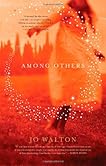
Review of Among Others by Jo Walton

Among OthersAmong Others by Jo Walton
My rating: 2 of 5 stars

There's such a lot wrong with this novel it's hard to know where to start. On the one hand, it's easy to read, even though I got to a point where I was thinking, enough with the shopping excursions and book purchases, have something happen already! Morwenna's sad situation, her out-of-place feeling at school and her struggles with her handicap (something the author herself obviously has an intimate knowledge of) are all movingly detailed. And I like the idea of a daughter having to face an evil magical mother. Usually in fantasy fiction, it's a son contending with an evil father. As well, there is an attempt to imagine how magic might work in the real world that we're all familiar with, through coincidence and such, and that gives the story a verisimilitude that's appealing.

Now that I've got the positive aspects out of the way, let's look at the shortcomings. There is so much talk of science fiction in this novel, including specific authors and books, that it can feel at times more like a recommended reading list than a novel. I found myself thinking of a statement in Brenda Ueland's book, If You Want to Write: "You cannot move people by a second-hand infection" (p. 119, Graywolf Press paperback edition). In other words, when Heinlein, Zelazny, Le Guin et al wrote the books that Jo Walton loved so, that was art, but when she wrote a book that was eighty percent, "Squee! SF is so great! I love Heinlein and Zelazny and Le Guin! Squee!" that was not art.

Another problem is that the most climatic event in the heroine's life happened before the novel begins. That put me off balance. I kept wondering, are we ever going to get a detailed description of what happened? (The answer is no.) I also wondered, why didn't she just write a novel about that event? Maybe it would have been more interesting.

Since novels need climaxes, another climax has to happen, and compared to what has gone before, it feels anticlimactic. The worst part of this anticlimactic climax, maybe the worst part of the book, is that it violates the laws of magic that Walton took such pains to establish beforehand! All through the novel she's telling us, "Magic is always deniable," and then at the very apex of the plot, gives us a thoroughly undeniable piece of magic, with no explanation. What happened there? Was the ending rushed? I don't know, but it's a boner of major proportions. (Hey, Morwenna's a horny teenage girl. Why not throw in a double entendre?)

In summary, it's another one of the most wildly overrated books around. There appear to be a lot of those. Why is that?

View all my Goodreads reviews

Tuesday, May 10, 2011

Review of Rut by Scott Phillips

RutRut by Scott Phillips
My rating: 3 of 5 stars

This story is set in a near-future dystopian United States. Climate change, pollution and peak oil have all taken their toll on a small town in Colorado. Once a popular tourist destination but now dying, its only visitor is a young biologist, come to study the local frogs. Although frog populations are declining worldwide, frogs are flourishing near this town. However, effluent from a mining operation is having an odd effect on some frogs, leaving them stuck in the tadpole stage; they'll grow up to a foot long, but remain legless, a fate that parallels that of many of the town men, who are missing legs from all the wars they've served in, and a boy named Cole, who's seventeen years old but looks eleven. Like the frogs, his development has been stunted by his environment.

Although this is definitely science fiction, it's not a fast-paced novel with emphasis on action and thrills. Rather, it focuses on the everyday lives of the townspeople and how they react to the arrival of the newcomer. One might classify this as literary fiction, but that doesn't mean it doesn't go anywhere; this ain't The Shipping News. To the contrary, the ending is explosive... and I don't just mean that figuratively. While it's not a page-turner, if you stick with it until the end, it will stick with you.

In fact, I was a little sad to have to give away my copy. This is a Concord Free Press book, which means you get a copy for free but you have to give a donation to a charity of your choice, then pass the book on so that someone else can do the same. So if you want to read it, you can either ask Concord for a free copy (they have a form for that purpose on their web site), wait until somebody gives you their copy, or wait until the novel becomes available from a traditional publisher and buy it. Take your pick.

View all my Goodreads reviews

Thursday, March 3, 2011

The Hobbit by Théâtre Sans Fil: Not That Great, Really

Sometimes, when you take in something that's famous or has been heavily praised, and it doesn't live up to your expectations, it's hard to admit that to yourself. You want to like it, because you think you should. After all, everybody else seems to. I experienced this recently in the context of the puppet show The Hobbit by Montreal-based troupe Théâtre Sans Fil. (I daresay that if you're going to be mediocre, it's a good idea to aim your work at children, who tend to accept things the way they are and don't have extensive critical faculties.)

It was therefore lucky for me that I happened to sit down next to a certain acquaintance. Fredericton is like that. You can decide on the spur of the moment to go to the theatre by yourself, find your way to your reserved seat, and discover that you're right next to someone you know. The city is just that small.

This particular someone is the most upbeat, positive, easily-delighted human being on the planet. She loves everything. For example, I saw she had a Kobo ereader with her in the theatrre. "Oh, I have one too!" I exclaimed. "Do you love it?" was her response. And I felt duty-bound to say, "Uh, yeah," even though, really, I just like it.

But when the show was over, she said, "Well, that was fun." Ouch! Coming from her, that's some pretty damning criticism. So I feel justified in my conclusion that despite its having toured all over Europe, Asia, etc., Théâtre Sans Fil's puppet show is not that great. My friend didn't love it.

The strong point of the production has got to be the puppets, some of which are spectacular. Gandalf and the elves flounce and glitter in their flowing finery. Bilbo, on the other hand, is kind of unattractive. I wondered if his face had been copied from that ugly animated version of The Hobbit. I also wondered why he had green hair.

Another aspect of the Bilbo puppet that I found somewhat distressing is that he never got to use his legs. They just dangled. Is that world-class puppetry? Honestly. With most of the characters, this wasn't a concern because they didn't have legs. Gandalf, the elves and the dwarves were all robe people. But there's Bilbo with an obvious pair of legs and he's swishing around like a seahorse.

I should probably mention here that Théâtre Sans Fil, which means Theatre Without a String, lives up to its name: the puppets are not manipulated from above with string; instead, the puppeteers stand behind the puppets, shrouded in black, and manipulate them directly. It's the same principle that works so well in the Famous People Players shows. Indeed, Théâtre Sans Fil also makes use of ultra-violet light, and the puppets can be seen to glow in moments of low light. It all works to great effect in dark scenes, such as the one in Mirkwood Forest. Indeed, that scene is the highlight of the show. When Bilbo loses contact with the dwarves, glowing filaments appear and spin themselves into spider webs as we watch. Glowing spiders make an appearance soon afterwards, and they're pretty neat too, although they tend to cluster together in suspiciously human shapes.

In well-lit scenes, which, bizarrely, constitute most of the show, the illusion is ruined by the clear sight of people in hoods behind the puppets. One is at a loss to explain such unprofessionalism. Why did they choose to beam lights all over the puppeteers during most of the scenes? Didn't they check how it would look beforehand?

Mind you, this gaffe did add an interesting element to the dwarf puppetry. Most of the dwarves in The Hobbit are fairly anonymous and interchangeable, as suggested by their rhyming names: Fili and Kili, Bifur, Bofur and Bombur,and so forth. In tacit acknowledgement of this fact, the puppeteers often lined up a row of dwarf puppets on a pole or rod of some kind and waved it back and forth, making it look as if the dwarves were playing see-saw in the park. Well, when you could see the puppeteer's heads sticking out from behind the waving dwarf-row, which was most of the time, it looked as if there were extra, black-hooded dwarves behind the first row. Like mirrors in a dining hall, it made the dwarf entourage appear bigger than it was. Definitely what you want when you're going up against a fire-breathing dragon.

But back to Bilbo's limp legs. When doing this kind of puppeteering, it is a simple matter to control the legs, more so than with marionette puppeteering I should think. All one needs are sticks connecting each leg of the puppeteer to the corresponding leg of the puppet. Indeed, this was done with the trolls, who had legs, and Gollum, who also had huge feet and was one of the most appealing personages in the show. Yet Bilbo, the main character over whom one would expect more care to be taken, was left dangling, literally.

With the exception of Bilbo and his legs, most of the production design effort went into the puppets. The set was exceedingly sparse, consisting mostly of Bilbo's front door and a couple of big wooden things that looked like boxes with jointed lids. These two boxes were moved around to be made into everything: Bilbo's table, hills, cave openings and so on. Sometimes this worked out better than at other times. In particular, things became odd and confusing as Bilbo wandered around looking for food before running into the trolls. He approached a box, hovered over its open lid, ineffectual legs flapping, and when he got to the other side, the lid apparently tried to close on him, but he managed to wiggle out of the way. I wracked my brain trying to figure out what this alien landscape was supposed to represent. I don't recall troll country being described that way in the book.

In addition to Bilbo's leg handicap, fortunately compensated for by his hovering abilities, Bilbo is haunted by two oppressive forces that follow him around: irritating music and excessive narration. The music is the sort of relentlessly peppy stuff that gets foisted on kids. Maybe they like it; I don't know, but like it or hate it, it sometimes makes the narration difficult to hear.

As for the narration, I realize that if you want to condense a novel with a complex plot into a puppet show that lasts an hour and a half, you're probably going to have to narrate something. But you ought to refrain from narrating things that could be better expressed in dialogue. The tendency to overnarrate got underway fairly early on and worsened as the show continued. Near the end, practically everything was narrated. Thorin Oakenshield's rage at having the Arkenstone withheld from him as well as his eventual conciliation is all dispatched in one sentence. They seemed in a raging hurry to get the play over with so that everybody could go home.

Earlier I mentioned the dragon, Smaug. The Smaug puppet is a fine one, decked out in glowing ultraviolet reds and greens. Ironically, its failing is its lack of flaw. Smaug is supposed to have a vulnerable, bare spot on his left breast. This is mentioned no less than three times in the play, once by the narrator, once by Bilbo, and once by a helpful bird. Furthermore, Bard of Laketown stabs at it with a sword. (In the book, he uses an arrow, but I suppose that's difficult to pull off with puppets.)

But where is this bare spot? Nowhere to be seen, and I think this may be the stupidest oversight of the whole sadly mediocre puppet show. It would have been so simple a matter to, say, glue or sew a piece of black felt onto the left underside of the puppet. It would have shown up so well against the ultraviolet colours. But they didn't. Why didn't they? Why did they allow this confusing inconsistency to stand? My guess is that they didn't give a crap. After all, if they were interested in or capable of attention to detail, I wouldn't have found so many details to pick on and the whole production would have been much more enjoyable.

In conclusion, while some spectacular performers and troupes have emerged from Montreal, Théâtre Sans Fil is not one of them. At the end of the play, the senior member of the troupe announced that they are working on a puppet version of Weaveworld by Clive Barker. I expect it will be similarly mediocre. But the puppets will look great.

Friday, June 11, 2010

The Kobo eReader: a Long-term Review

The Kobo eReader, a lower-priced alternative to devices such as the Kindle, has launched in Chapters and Indigo bookstores across Canada on May 1, and will launch in Borders bookstores in the United States on June 17. Having rejected the Kindle as too expensive and proprietary and the Sony as too slow in its page-turning, I awaited the Kobo eagerly and pounced on it as soon as it became available. Had I reviewed it during those first two weeks, the result would have been about ninety percent gush. Now that I've had a month to live with the Kobo and learn its little quirks--now that the honeymoon glow has faded, I am in a position to dispassionately discuss its strong points and shortcomings, and even those bugs that reveal themselves only upon extensive use.

Advantages

Price

Indeed, the $149 price tag is what first attracted me to the Kobo. The first e-reader I ever heard of was the Kindle, which at that time cost over $300. My initial question was, how many e-books would you have to buy to make back your money? Thirty? It would take years. I didn't see the point of bothering with e-books when such an extraordinary initial investment was involved. (Let's not even get into the iRex iLiad, with its US$859 price tag.)

Pre-Kobo, I'd looked into the possibility of getting my hands on a Sony e-reader that is no longer made, the PRS-505. For reasons known only to themselves, Sony chose to discontinue this e-reader, cutting their line down to only two, one that is too expensive (the PRS-600) and one that is too small (the PRS-300). If you don't want to shell out for the touch-screen, your other option is the piddling 5-inch screen. I don't care if my e-reader has a touch screen or not, and in my experience, they don't respond very well, in addition to getting covered in finger grease. Neither do I require all the other bells and whistles, such as 3G wireless access and the whiz-bang rotating display, to say nothing of Internet surfing. I want an e-reader in order to read books on it; isn't that really the point? Kobo, it seems, is the first company to clue into this. I might not have bought the Kobo e-reader if I'd found a reasonably-priced PRS-505 before it came out, but owners of PRS-505s charge high prices for their used e-readers. They seem to believe they are collector's items.

Page-turning Speed

I am glad that I didn't get a PRS-505, though, because it probably wouldn't have turned pages fast enough to suit me. I have tried out both the current Sony e-readers and the page-turning is uncomfortably slow, taking as long as 4 seconds. This is the Sony e-readers' primary weakness. I'm a fast reader, and I want to be able to turn pages on an e-reader at least as fast as I turn them on a real book. Kobo pages turn in about 2 seconds, which is just about right. New chapters are slower to load, but as that's an event of much less frequent occurrence, it's not a concern.

Design

I like the uncluttered design of the Kobo. Why does the Kindle have an entire keyboard? What is the need for that? It's space that they could have given over to a larger screen. Despite its smaller overall dimensions, the Kobo's screen is 6 inches across, same as the Kindle. It has a matte finish that emits minimal glare, providing a comfortable reading experience.

100 Free eBooks

The Kobo comes with 100 free public domain classics, more than any other e-reader. This is a nice perk. While it's true that all those books and more can be downloaded for free from sites like Project Gutenberg and ePubBooks, it would take some time to download all one hundred of them. Plus the Kobo versions come with prettier covers. It feels as if you're getting your money's worth immediately. After all, if you wanted to, you could read your Kobo for years without having to buy any new e-books, and fill in all those gaps in your classical literature education.

Prompt, Respectful and Helpful Customer Service

In response to a discrepancy between my experience and what was stated in the user manual--which I will describe in more detail later on--I wrote an email to Kobo customer service. I got a better response than I have received from any other customer service agent I've ever dealt with via email. This may say more about the dismal quality of online customer service in general than it does about Kobo's, but I had never before had the experience of having my issue fully understood and appropriately addressed on first contact. I'm more accustomed to the agent not reading my email carefully and so telling me things that I already know and that have no bearing on the problem. Or worse, copy/pasting a section of their help file into an email and sending it to me. Obviously I read all available documentation before contacting customer service. I don't need to have customer service waste my time in this way, nor am I an idiot, but the average customer service agent appears to assume that all the emails they receive come from idiots, and treats them accordingly. It is insulting and ultimately does not solve the problem.

I didn't get this from Kobo customer service. I got an email that carefully addressed every issue I'd brought up and told me exactly what I needed to know. It was most refreshing.

Kobo's shortcomings

User Settings Not Retained

When I'd just brought the Kobo home and was still working out what I could do with it, such was my enthusiasm that I read the user manual all the way through. I know, I know--I'll have to turn in my Techno Geek membership badge. Anyway, I discovered I could change the display of the book list, to make it look like books sitting on shelves--cute! I could also change the sort order from title to author. I preferred that. I liked seeing how many books by a particular author I had--Jane Austen is especially well-represented.

I was perfectly happy with these features until I turned the e-reader on the next day and discovered that everything I'd changed had reverted back to the defaults.

The Kobo e-reader will remember what books you are reading, displaying them in a separate list, and will bounce you straight to your current page when you select them. Why on earth can't it also remember and retain your display settings? This seems like quite the careless oversight.

Missing Features

Another thing I learned by reading the manual is that you can remove books from your "I'm Reading" list--that's the list of books you have started to read but not finished--by plugging the e-reader into your computer, logging into your Kobo account and clicking on "I'm Reading." I tried that, but could not locate "I'm Reading."

When I contacted customer service, (a positive experience, as mentioned above,) I was told is that there is no "I'm Reading" section in Kobo Online, and no way to remove books from your "I'm Reading" list. This feature hasn't been implemented yet.

I daresay it might have been wiser to hold off on adding its description to the manual until the feature itself was safely functional in the Kobo. After all, it's not as if the manual is a print publication. Appropriately enough, it's an e-book. Reprinting it and sending it to the customers when appropriate should be no very difficult or expensive thing. Furthermore, it's not a great idea to draw your customer's attention to handy little features that your product doesn't have.

Minimal Formats

Kobo supports only two formats, ePub and PDF. This is not very many, and is the one thing that made me hesitate before buying one. I bought it anyway because I knew I could convert other formats, such as HTML and word processing documents, into PDF. When I did so, I discovered quite the colourful bug. More on that later. Kobo promises to add more formats later. Readers who feel it important to have good format support might want to wait until then before purchasing.

Room for Improvement in the Big Blue Button

In his review of the Kobo Reader in the National Post, Mark Medley memorably declared about its famous big blue button, "a pox on whoever designed this thing." I have not found it as troublesome as he has, but it doesn't need to click so emphatically. One day, I was sitting on the couch reading one of my freebie Jane Austen novels. James sat at the other end, using his computer. Several pages later, James turned to me and said, "Reading e-books is a lot noisier than reading regular books." My clicking was disturbing him.

We also wonder why the choice was made to place the big blue button (Kobo calls it the directional pad or D-pad, but that's never going to stick) in the right corner. It would have been more convenient to have it in the middle, where it would be equally accessible to both hands. I suppose they might have been imitating true books, whose pages you turn by grasping the right corner, but there was no need for that and no advantage in doing it. No button is going to feel like turning pages anyway, and they may as well have put it where it would have worked best.

eBook Formatting and Proofreading (or Lack Thereof)

About those free e-books... they're not that nicely formatted. There is no indenting, and italics are represented with underscores. Sub-chapters have not been properly rendered. James is reading Madame Bovary on the e-reader, and was puzzled when he finished chapter 13 and turned the page, only to find himself apparently back at chapter 1. It turns out that Madame Bovary is in multiple parts. There are 13 chapters in Part 1, and when you finish that part, you come to Chapter 1 of Part 2. But the parts are not shown in the table of contents; only the individual chapters. James also found multiple misspelled words, as though the novel had been scanned in and then not proofread.

Kobo is using the 100 free books as a selling point. It would have been a better one if they'd gone to more effort to format the books.

Unnecessary Lights That Don't Work Properly

Besides reduced eyestrain, the greatest advantage of the non-backlit E Ink screens found on true e-readers like the Kobo (as opposed to multipurpose devices like the iPad) is the low power usage. Eco-friendly E Ink screens only draw power when the image onscreen is changing, for example, when you're turning a page. So it seems a shame that the Kobo company chose to put two indicator lights into their e-reader. I don't know how much this ups the power consumption, but I would imagine the percentage must be sizable.

The red light is meant to go on when your e-reader is fully charged. This is useful and arguably necessary, or at least it would be if it worked. In actual fact, this untrustworthy light often goes on well before the e-reader is fully charged, and pointlessly stays on even after the e-reader has been unplugged.

The blue light, on the other hand, is useless and silly. It goes on when the e-reader is processing: when you're turning a page or bringing up a new book or chapter. Or rather, that's what it does some of the time. It seems to operate fairly randomly. But in any case, you don't need a light to tell you that a page is turning; you know when a page is turning, because the screen flashes a negative image of itself. All the E Ink screens I've seen do this; it seems to be an unalterable part of their functioning. The e-reader also displays a little sunburst shape in the upper right corner when loading a new book or chapter, and in contrast to the light, it does so consistently, rendering the light even more redundant and pointless.

The only positive aspect I've noted about these lights is that they both come on at the same time when you turn the e-reader on, resulting in an attractive purple colour. Other than that, their primary impact is to force you to charge your e-reader more frequently.

Bug Report

After converting a Word document to PDF and loading it into the e-reader, I decided I wanted to make a change to its table of contents. I regenerated the PDF and reloaded the document into the reader.

To add a new document to the Kobo, you plug the e-reader into your computer's USB port, where it is treated just like a memory stick, and copy the new file onto it. But when I copied the new version of my file onto the Kobo and booted it up, the document turned out to be unchanged. My alterations to the table of contents were missing. It looked as if the Kobo did not recognize and implement the file change when a file with the same name was copied over the old version. What I had to do was delete the original version, unplug the reader and let it recognize the change, then plug it back in and copy the new file. I had to go through that whole tedious process every time I changed the file. That's bug number one.

After deleting the old file and copying the new one, I discovered that each chapter title now appeared twice in the table of contents! Neither of the two pointed to the right page either.

Thinking something must have gone wrong with the generation of the table of contents, I went back to the Word document, regenerated the TOC, and generated and loaded a third PDF. It looked fine in Acrobat Reader, but once loaded into Kobo, it now had three of everything in its table of contents.

After much frustrating deleting, unplugging, plugging back in, copying, regenerating and so on, my table of contents getting ever longer, I began to wonder if the file deletion was in fact complete. Perhaps the file was only removed from the document list, its table of contents remaining intact? Then, when a new version was introduced, perhaps its new table of contents entries were being appended to the old.

Acting on this hunch, I renamed the file and copied it into the reader. This time, its table of contents was fine.

Apparently, Kobo accumulates ghostly tables of contents that can never be eliminated, never sent to their rest. Whooooo...

Conclusion

Although the Kobo eReader has its shortcomings, they are minor (except for the lights; as an eco-worrier, that really bugs me), outweighed by the device's advantages, and many of them can probably be repaired in later software releases. If money is no object for you, you'll probably want to go with something more high-end--the iRex iLiad looks quite nice. But if reluctance to drop a few hundred dinero is the only thing preventing you from shelling out for an e-reader, then the Kobo may be the one for you.